Plan the Cut, Then Check It
By SalonScissors editorial team Updated
A good cut is agreed before the scissors come out. Here’s the checklist, from the first question to the last look in the mirror.
It’s the same order your course assesses: consult and look at the hair, choose the technique and then the tools, cut, and review the result with the client. Australia’s unit SHBHCUT006, which covers barbers as well as hairdressers, sets it out step by step.
What to ask before you cut
Six questions cover most consultations. Ask them in plain words and let the client show you on their head.
-
Ask what they like now
“What do you like about your hair now?” That’s what you keep.
-
Ask what they want to change
Get them to point: length, shape, weight or the fringe.
-
Ask what they never want again
Their worst haircut tells you as much as the photo.
-
Go through their photo
Ask what they like in it and what they’d leave out. A blow-dry or set curls in the picture isn’t always how they wear it.
-
Ask how they wear it
Air-dried or blow-dried, which parting, and whether they tie it up.
-
Agree where the shortest piece sits
Show it on their head with your fingers or the comb.
Barbers, add three more: the clipper guard numbers, how high the fade or taper goes, and the neckline shape: square, curved, faded or blended. The barber scissors guide covers the tools for each.
Then agree a pause: “I’ll show you after the outline, before I take any weight out.”
How to read the hair: wet or dry, curl and density
Read it dry, before you wet it. What you see decides the state you cut in and which tools come out.
-
See it as they wear itIn their usual parting, with the curl doing what it does at home.
-
Wet or dry, keep it evenWet hair hangs longer. Pick wet or dry for the cut and keep the whole head the same.
-
Check it the same wayJudge the finish dry, in the parting and style they’ll walk out with.
- Curl pattern. Straight, wavy, curly or coily, area by area: it can change from the crown to the nape. Curls shrink as they dry, tighter curls more, so cut curly hair dry or leave extra length. Curl-by-curl work wants fine tips.
- Density. How much hair there is, which isn’t the same as how fine each strand is. Fine strands can still be dense, and thick, dense hair is where a thinner earns its place.
- Growth. A cowlick, a double crown or a strong nape whorl decides where a fringe or a short nape can sit. Check them dry, before you cut.
Where the tool choice fits
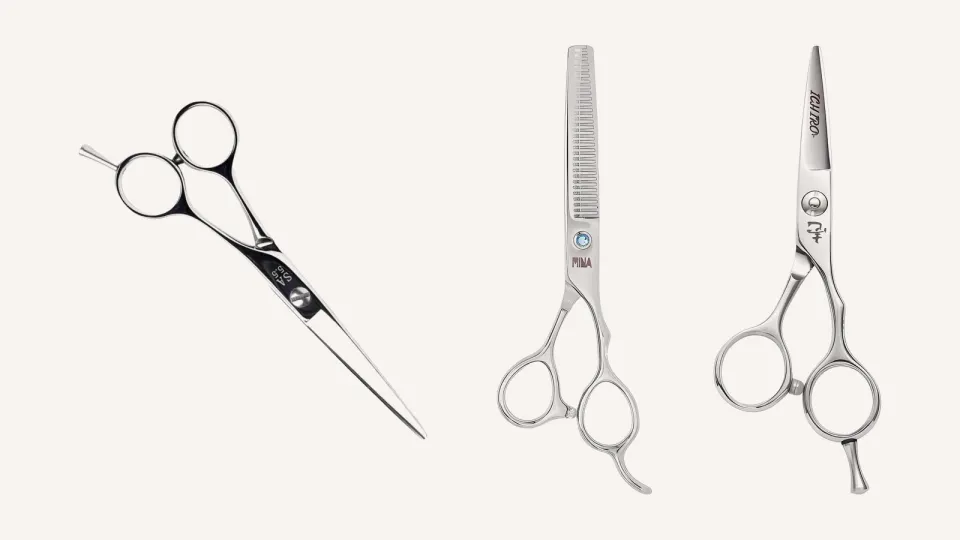
Pick the tool after you’ve agreed the plan, not before. The outline is cutter work, weight is thinner work, and close detail wants a short blade or fine tips.
-
Outline: your main cutterPerimeters, bob lines and the base of every layer.
-
Weight inside: a thinnerOnly when the plan calls for it, and after the outline is cut.
-
Detail: a short bladeFringes, around the ears and necklines. Your tips or a 5.0” pair.
For the length, edge and a real pick for each cut, from bobs to scissor-over-comb, see which scissors suit which haircut.
How to check the finish
Check it dry, in the parting and style they’ll walk out with. Then run three checks before you pick the scissors back up.
-
Check the outlineFront, sides and back, with the back mirror. Look at the corners and the nape.
-
Check the balanceHair dry and dropped. Are both sides level? Any heavy spots or holes?
-
Ask about their changeUse their words: “Is the length around your face where you wanted it?”
If something’s off, take a little and check again. Barbers, check the neckline and both sides of the fade in the hand mirror. Finish with a minute on home care: how to dry it, what product to use and when to come back.
Apprentice? Write down the plan, the tools you used and what your educator said. The practice record has room for it.
Quick questions
What if their photo won’t work on their hair?
Say so before you start. Show them what their density and curl will do at that length, then agree the closest version that will sit the way they wear it.
What if they change their mind halfway?
Stop and show them what’s possible with the length that’s left. Agree the new plan before you carry on.
Should I cut curly hair wet or dry?
Dry shows you where each curl sits. If you cut it wet, leave extra length and check it dry before you finish.
What goes on the client card?
Their keep, change and avoid, your hair notes (curl, density, growth), the tools and lengths you used, and anything to change next time.
Choose the tools
Plan agreed? Match the scissors to the cut, with one real pick and price for each.