Top 10 Salon Scissor Care Habits for a Busy Team
Ten scissor care habits for a whole salon team: cleaning, drying, a home for every pair, one routine per maker, a drop rule, backups and an audit.
By SalonScissors editorial team Updated
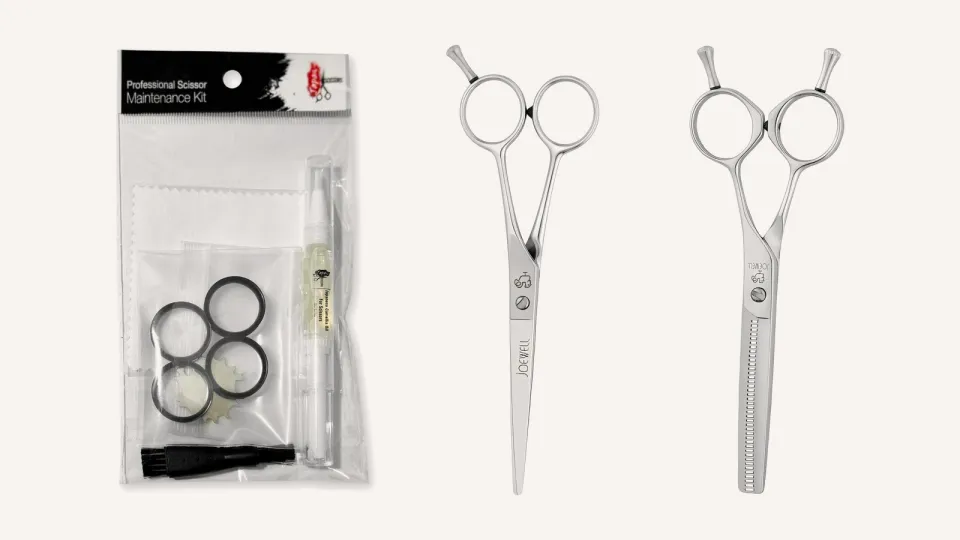
In a salon, scissors don’t fail because one person forgot once. They fail because nobody agreed who does what. These ten habits turn scissor care into something a whole team can follow without thinking.
How we chose: Ten habits for teams, from maker care pages. We sell the kit shown and haven’t run cutting tests. Reviewed 4 November 2026.
More on how we chose
Who it’s for
- Salon
- Barber
- Apprentice
Clear and clean
Brush off the hair, then clean the blades with a product your salon and maker allow.
Dry completely
Dry the blades, rings and pivot before the pair goes away.
Check the model instructions
Oil and tension care depend on the pivot. Some pivots need no oil at all.
Protect each tool
Store each pair closed and dry in its own slot or sleeve.
1. Brush and wipe between every client
It takes seconds, and it’s the habit that does the most. Brush hair off the blades and out of the pivot, then wipe both blades with a soft cloth. On a thinner, brush between the teeth too. Our cleaning guide has the full routine.
2. Dry the pivot before the pair goes away
Moisture left after cleaning can rust scissors, as Joewell warns. Dry the blades, rings and pivot completely before the pair goes back in a hand or a case. If everyone dries the pair, nobody finds a damp one in the morning.
3. Give every pair a home and an ID
Assign each pair its own slot, sleeve or case, and put the ID on the case: C1 for a cutter, T1 for a thinner. Closed and dry beats a drawer, because edges knock against combs, clips and other scissors. Two similar silver cutters stop getting mixed up.
4. Follow each maker’s care page
Kasho says to oil the pivot daily for most of its series, and some of its pivots need no oil. Joewell says to oil after you disinfect. A single house rule gets one of those wrong. Pin the maker care instructions at the station and tick off which brands you own.
5. Use one approved cleaning product, the same way
Choose a cleaning product your salon has approved for scissors, check your makers allow it and follow its label, including how long it stays on. NSW Health says equipment shouldn’t be soaked in disinfectant unless the maker’s instructions allow it. Other states have their own rules.
6. Check the edges on a set day
Pick a regular day and have everyone look along their edges in good light for nicks and bent tips. Check the pivot screw and any finger inserts at the same time. A scheduled look catches the nick before it becomes a client’s bad cut.
7. Log events, not every wipe
Keep a short log: drops, tension changes, sharpening and new parts, one line each, under the pair’s ID. A notebook or a shared sheet is plenty, and our maintenance log guide has a template. Keep the sharpener’s report with the same ID.
8. Agree the drop rule
Make it a team rule that a dropped pair stops cutting, even if it looks fine. Tag it, close it, put it aside and use a backup. Yasaka warns that a drop can damage the blade, and our dropped scissor plan sets out the steps.
9. Keep a backup for every stylist
A backup pair means a service or a drop doesn’t cost you a booking. It needs to match the stylist’s hand and usual size, or it won’t get used. Keep it clean, in its own slot, and ready. The backup scissor plan explains what to look for.
10. Audit the kit when the team changes
When someone joins or leaves, or a pair goes away for service, list every pair again: ID, brand, size, hand and who uses it. Sort the pairs into ready, needing service and out of use. Our salon scissor audit walks through it.
The habits at a glance
| When | Habit |
|---|---|
| Between clients | Brush, wipe and dry (habits 1 and 2) |
| End of the day | Everything back in its own slot (habit 3) |
| Set day each week | Edge, screw and insert check (habit 6) |
| When something happens | Log it, and apply the drop rule (habits 7 and 8) |
| When the team changes | Backups and audit (habits 9 and 10) |
Who owns what?
Each stylist owns habits 1 to 3 for their own pair. The salon owner or senior stylist owns 4, 5 and 8, which are team rules. The rest can be shared on a rota. Write it down once, and the habits survive a busy Saturday.
Where should a team start?
If your salon does none of this today, don’t launch ten habits at once. Start with habits 1, 2 and 3, because they cost nothing and every stylist can do them alone. Add the drop rule and backups next, then the log and the audit. A team that does four habits every day is better off than one that agreed to ten and keeps three.
A one-card version for the station
Print or copy this onto a card at each station:
- Brush, wipe, dry.
- Back in its own slot, closed.
- Edges, screw and inserts on the set day.
- Dropped or nicked? Tag it, use the backup, book a service.
Questions teams ask
Common questions
How often should a salon sharpen its scissors?
There’s no fixed interval. Book a service when a clean and a tension check haven’t fixed pushing or folding, or after a nick or a drop. The log shows how long a sharpen lasts on each pair.
Should stylists share scissors?
It’s better not to. A shared pair is the wrong hand or size for someone, and it needs cleaning and drying between users under your salon’s rules.
Do thinners need the same care?
Yes, plus a brush between the teeth, where cut hair and product collect. Check your maker’s page for oil and tension, because it can differ from the cutter’s.
What if our makers give different advice?
Follow each maker for its own pairs. The maker care page lists what each says, and you can ask us about a model that isn’t there.
Next step
Keep a cloth, brush and oil at every station, and read our full care guide for the routine. More guides are in our knowledge base.
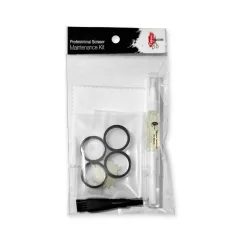
Maintenance Kit: Clean, Oil & Fix Hair Scissors
Best for keeping a cloth, brush and oil at every station
Comparing scissors for your kit?
Tell us what you cut and which scissors you are comparing.
Useful next reading
Read all blog posts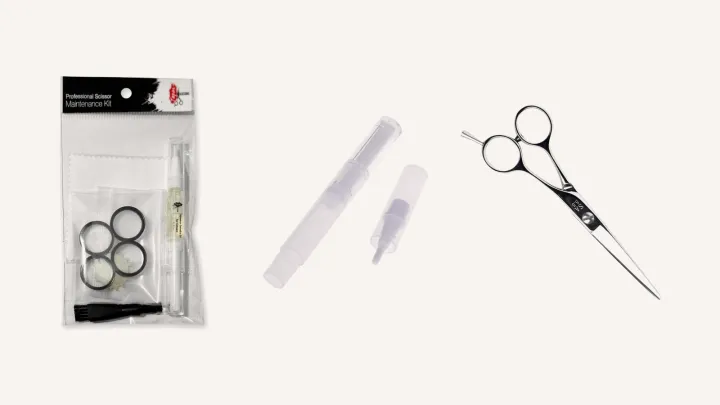
Top 10 Ways to Make Your Hair Scissors Last Longer
Ten ways to get more years from salon scissors: fit, a first check, hair only, rotation, closing them, drying, oil, tension, carry cases and early service.
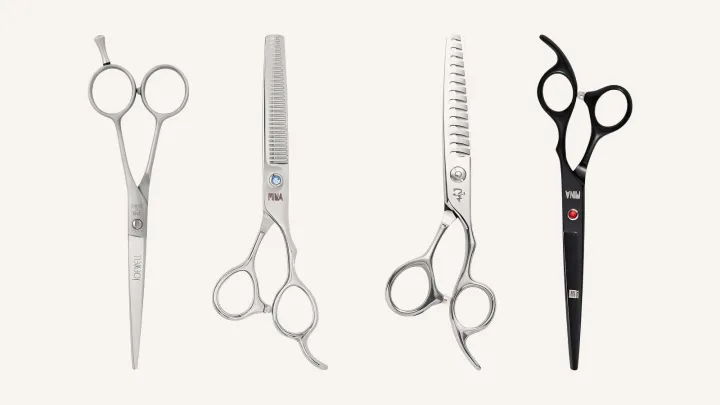
How to Audit Your Salon’s Scissors: A Simple Checklist
A quick salon scissor audit: list every pair, check its condition, sort what needs sharpening and make sure every stylist has a backup that suits them.