Salon Scissor Blades, Explained
A short guide to convex, bevelled, serrated and sword blades for everyday salon cutting.
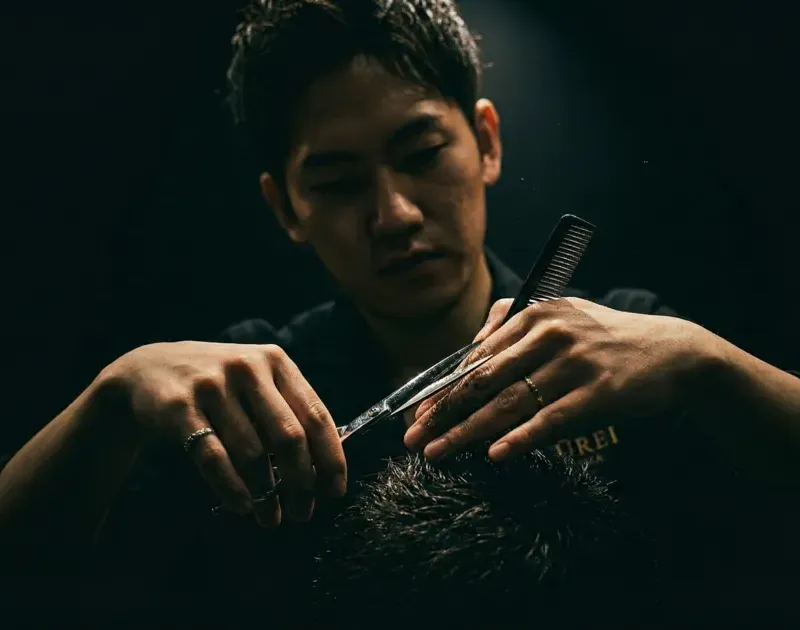
Blade terms that help you choose
The blade description tells you how a scissor is intended to cut. Read it alongside length and handle shape: those details work together at the chair.
Convex edge
A convex edge is a common choice for smooth slicing and point work. Keep it clean and use a sharpener familiar with that edge when it needs service.
Bevelled edge
A bevelled edge has a more defined cutting angle and a firmer feel. Some stylists prefer that feedback for straight lines and general cutting.
Serrated edge
Fine serrations help hold a section as the blades close. They are useful where grip matters, but a serrated edge is a different choice from a smooth blade for slide cutting.
Sword and slim profiles
A sword-style blade has a stronger spine and appears on some longer cutters used for over-comb work. A slimmer profile can be easier to place for detailed work. Check the individual model: profile alone does not tell you its full cutting feel.
Make the choice practical
Think about your three most common techniques. If one pair already handles them well, your next scissor can fill a specific gap. Compare cutting scissors by edge, size and handle, and check whether the product is a single cutter or a set.
Wipe and dry blades after use, store them closed in a case, and arrange service when they start folding or pulling hair. A clean pivot and suitable tension are worth checking before assuming an edge is dull.
Notes for your salon kit
Cutting ideas, model comparisons and simple scissor care for busy stylists.