Scissors for Fine Hair
Choose a clean cutting edge and tip control for soft, fine sections.
By SalonScissors editorial team Updated

Fine hair shows a tired edge
If a soft section folds or slips as you close the blades, check for residue and tension before making another pass. An edge that still pulls after cleaning may need service.
What to compare
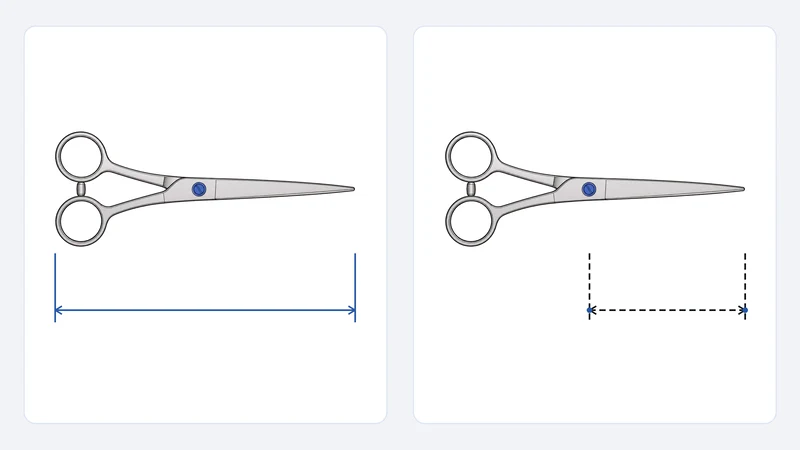
- Tip control: A shorter blade can be easier to place around a fringe, face frame or fine detail. Browse 5.0 inch and 5.5 inch options.
- Cutting feel: A smooth edge can suit slide and point work. Check the individual listing for its blade description.
- Handle fit: Pick a grip that lets you close the blades gently and consistently.
- Care: Keep blades free of product build-up so you can judge the edge itself.
A Mina Sakura cutter is one starting point if you want a short salon blade. Compare it with other cutting scissors in the size and budget that suit you. The right choice depends on your hand and how you cut, not on a steel label alone.
Keep the finish soft
Work in small, clean sections and let the edge do the work. For a sharper line, use the full blade with control; for detail, use the tip deliberately. If you need weight removal, choose a thinner for the result you want rather than using it everywhere.
Read the care guide before your first service and use a technician who understands the blade on your pair.