A Salon-Day Care Routine for Your Scissors
By SalonScissors editorial team Updated
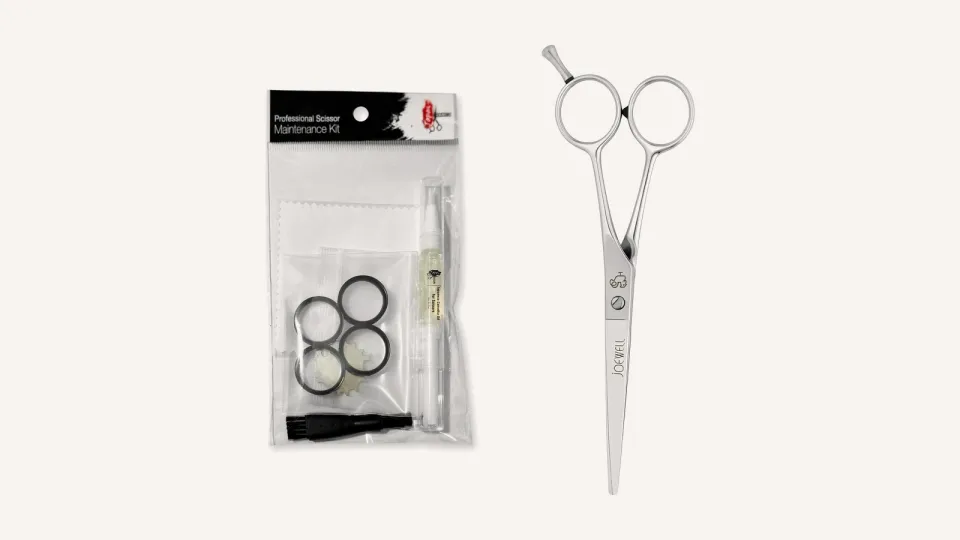
A scissor care routine works best when it follows your day. Do a quick check before the first client, a wipe between clients, a proper clean when the day ends, and always store the pair closed and dry. Oil goes on only as often as your maker says.
How we chose: Routine follows maker care pages, our cleaning guide and standard salon practice. Reviewed 4 November 2026. Follow your own salon’s hygiene rules.
What does a care routine look like across a working day?
Think of the day in five moments. Each one takes a minute or less, and together they stop the three things that wear scissors down: moisture, build-up and knocks.
How often should you oil, and does every pair need it?
Not every pair needs oil, and the right frequency depends on the pivot. Some makers say to oil daily, some after disinfecting and some say certain series need none. Follow the care page for your model. Our maker care instructions page collects the ones we stock, and the cleaning guide shows what three makers say.
What should you do about hygiene?
Cleaning and disinfection are different jobs. A wipe and a bit of oil keep a pair working, but they don’t make it hygienic. Follow your state’s hairdressing hygiene rules and your salon’s own procedure, use a product your maker allows, and don’t soak scissors unless the maker says you can. Dry them afterwards, because moisture left near the pivot is what you want to avoid.
What does a weekly check add?
Once a week, take thirty seconds to go further than the daily wipe:
- Look along each edge for a nick or a rough spot. Don’t run a finger along it.
- Check the tension using your maker’s method. Our guide to dull-feeling scissors shows the common check.
- Check the screw hasn’t backed off, if your model has an adjustable one.
- Look at your storage. Is the pair going into a slot that protects the tips?
Jot down anything you notice. Our maintenance log guide shows a simple format, which helps when you book a service.
What if several stylists share tools?
Shared scissors need a clear routine, because nobody wants to find a damp or nicked pair at the start of a shift. Agree who dries and stores each pair, keep spares in a labelled slot, and write down anything odd on the day it happens. Our salon tool audit gives you a checklist for the whole station, and our guide to buying scissors for a salon team covers sharing and spares.
What mistakes should you avoid?
- Putting scissors away damp. Dry them first.
- Leaving them on a trolley or in a pocket. Tips and edges get knocked. Use a slot, holster or sleeve.
- Cutting with scissors that have caught on something. Stop and check them. See our guide to dropped scissors.
- Over-oiling. A little goes a long way. Wipe off the extra before cutting.
- Adjusting the tension on a whim. Follow your maker’s method, and make small changes.
See also 10 scissor care mistakes for the common ones in more detail.
Common questions
How often should I clean my scissors?
Brush and wipe them after every client, and do a proper clean and dry at the end of the day. After chemical services, clean and dry the pair before you use it again.
Do I need to oil my scissors every day?
Only if your maker says so. Some makers say to oil daily, others after disinfecting, and some series need none. Check the care page for your model.
Can I leave my scissors on my trolley overnight?
It’s better to store them closed and dry in a slot or sleeve. Loose scissors can be knocked and nicked.
What if my scissors feel rough after cleaning?
Stop cutting with them, check the pivot is clear and dry, and check the tension. If the roughness remains, book a sharpening or service.
Next step
Keep the basics where you can reach them mid-day, using the kit and oil pen at the top of this page. For the full care picture, including when to book a service, read our care guide.
Further reading
For definitions of care terms, Scissorpedia is a reference site about hair scissors. Scissorpedia is a fellow member of the ShearAlliance (see ShearAlliance). More topics are in the knowledge base.