Buying Scissors for a Salon Team: An Owner's Guide
By SalonScissors editorial team Updated
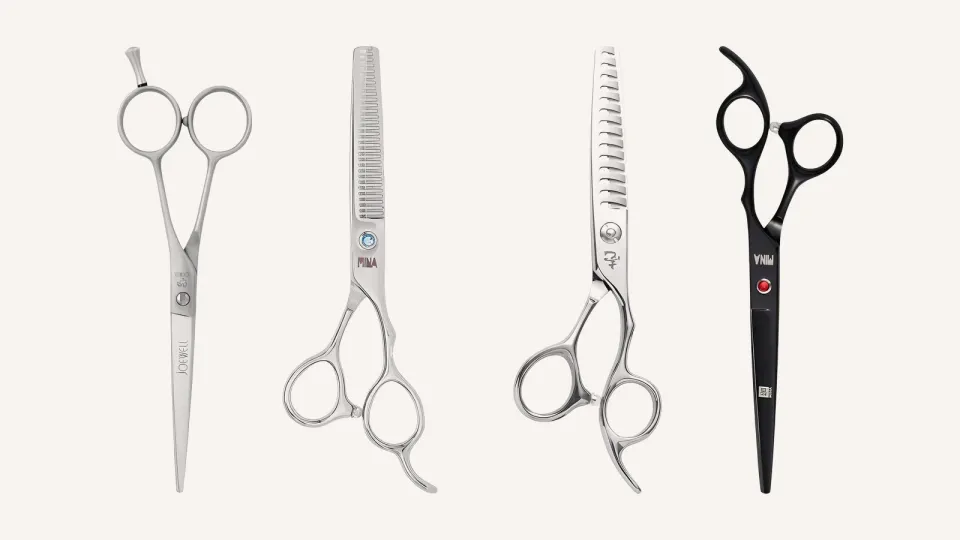
Buying scissors for a team is a planning job more than a shopping job. Decide who owns the tools, standardise what makes the day easier (care, spares, service), let each stylist choose what has to fit their hand, and stage the spend so you don’t buy ten of something you haven’t tried.
How we chose: Advice follows our audit, backup and care guides, and common salon practice. Reviewed 4 November 2026. We sell scissors and haven’t run cutting tests.
Who it’s for
- Salon
- Barber
- Apprentice
- Left-handed
Skip it if you’re buying only for yourself
What should you standardise, and what shouldn’t you?
Some things are easy to share across a team, and some are personal. Scissors fit a hand, so forcing one model on everyone usually backfires.
| Standardise | Leave to the stylist |
|---|---|
| Care routine and supplies at each station | Handle layout, ring fit and size |
| Where spares and cases are kept | The cutting hand, which has to match |
| Who books service and how often it is reviewed | Preferred brand and edge for their own work |
| A log of every pair and who uses it | Choice of specialist tools, such as a texturiser |
If you do want a matching kit for apprentices or a training bench, pick one cutter and one thinner and give every learner the same pair. That makes teaching simpler, because everyone is holding the same tool.
Who owns the tools?
Decide this first, because it changes everything else. Some salons supply tools, some expect stylists to bring their own and some do both. A mixed arrangement works if you write it down:
- Salon-owned tools are your responsibility to care for, service and replace. Label each pair so it can be tracked.
- Stylist-owned tools stay with the stylist. You can still set a care standard and a place to store them.
- Shared spares belong to the salon and need a clear check-out rule.
Put the arrangement in your team handbook, along with who pays for service and what happens after a drop.
How many spares do you need?
Enough that a stylist can keep working while their main pair is away. One spare can cover one booking, but not two stylists on the same day. Our backup scissors guide goes through the numbers, and the picture below shows the idea.
-
One spare, one booking
Write down which booking the spare covers, who will use it and that it suits their hand.
-
Two stylists, one spare
One spare can’t cover two people at the same time. If both main pairs are away, you need a second spare.
-
Spot the gap early
If a booking has no spare, sort it before the day: borrow, buy or move the sharpening date.
Remember hand and size. A right-handed spare doesn’t help a left-handed stylist, and a short detail pair isn’t a stand-in for a long cutter.
How do you buy in stages?
-
Audit what you already have
List every pair, who uses it and what shape it’s in. Our salon tool audit gives you a checklist.
-
Fix the gaps that stop work
First priorities are stylists with no spare, scissors that need service and missing left-handed pairs.
-
Add care supplies
A cloth, brush and oil at each station keep the tools you already own working longer.
-
Add specialist tools as needed
A longer pair for scissor-over-comb, a texturiser or a detail pair, bought for the person who’ll use them.
-
Review on a schedule
Pick a regular moment, such as a quarterly team meeting, to look at what’s worn, lost or missing.
What should you ask a supplier?
- Can you supply left-handed pairs in the same range as the right-handed ones?
- How are returns handled for a pair that doesn’t fit? Read our returns page and warranty page for ours.
- Is a volume quote available? Our wholesale page lets you send the models, sizes and quantities you’re planning.
- What does service involve, and how long will you be without a pair? See our guide on what to ask a sharpener.
- Is the seller clear about who they are? Our authenticity checklist covers what to look for.
What mistakes do owners make?
- Buying matching scissors for everyone. Fit varies, so matching only works for beginners on a bench.
- Forgetting left-handed staff and apprentices. Include them in the first audit.
- No spare plan. The first service or drop leaves a stylist with nothing.
- No log. Without one, you can’t tell what was serviced or when. Our maintenance log guide shows a simple format.
- Spending before auditing. You may already own what you need.
How do you set up a new stylist’s tools?
When someone joins, give the same short induction every time. Ask their cutting hand and the sizes they use, add them to your scissor log, and agree where their pair is stored. Show them the care routine at the station, and tell them how to report a nick or a drop.
If you supply the scissors, check the pair on the day it is handed over, using our first-use fit check. If they bring their own, ask them to show it to you once, so you know what’s in the building.
Common questions
Should every stylist in my salon use the same scissors?
Not usually. Hand, handle and size need to fit the person. Standardise care, spares and service instead, and give apprentices a matching kit if it helps teaching.
Who should pay for sharpening?
That’s a salon decision. Many salons set a rule for salon-owned tools and another for stylist-owned tools. Write it down so there are no surprises.
How often should I replace salon scissors?
There’s no fixed schedule. Replace a pair when it no longer fits, has damage that service can’t fix, or the cost of keeping it going outweighs a new one. Track the condition in a log.
Can I get a quote for a team order?
Yes. Send the models, sizes and quantities through our wholesale page and we’ll quote before you order.
Next step
Start with the audit, then use the scissor finder or our guide to the best scissors for apprentices to fill the gaps. For volume orders, send a wholesale enquiry.
Further reading
For a reference on scissor terms and care, Scissorpedia is an information site about hair scissors. Scissorpedia is a fellow member of the ShearAlliance (see ShearAlliance). More topics are in the knowledge base.