20 Beginner Questions About Hair Cutting Scissors, Answered
Straight answers to 20 beginner questions: what size to buy (5.5”), which hand, offset or straight, cutter or set, and what to spend, from A$109.
By SalonScissors editorial team Updated
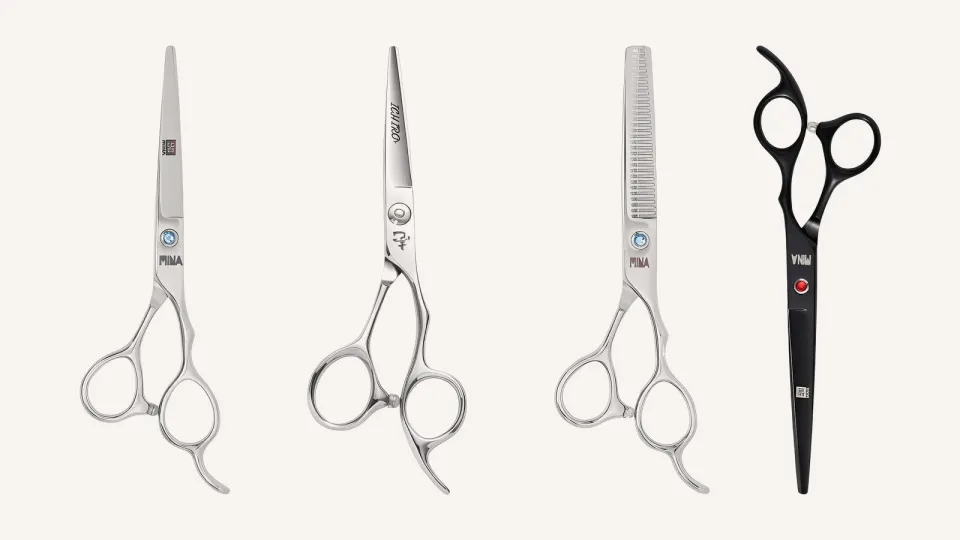
Short version first, then all 20.
How we chose: Picks from our range, based on maker specs, listed options and price. We sell them and haven’t run cutting tests. Prices checked 15 October 2026.
The six big questions
What size scissors should a beginner buy?
5.5” for most beginners. It covers everyday sections and detail work. Go 5.0” if you mostly cut fringes and short hair, or 6.5” to 7.0” for barbering and scissor-over-comb. The size table below has a pick for each.
How much should I spend on my first pair?
A$109 to A$219. The Mina Umi cutter is A$109 and the Ichiro Ergo Apprentice A$189. Need a thinner too? The Mina Umi set is A$164.95 and the Ichiro Ergo set A$219. Keep about A$35 for a case and a care kit.
Which hand should I order?
The hand you cut with. A left-handed pair has its blades reversed, so they close properly in your left hand and you can see your cutting line. Turning a right-handed pair over doesn’t do the same job. The left-handed guide has picks.
Should I buy a single cutter or a set?
A cutter, unless your course or your clients need a thinner now. When you do need both, the set is cheaper: the Mina Umi cutter and thinner cost A$218 bought one at a time, or A$164.95 as a set.
What’s the difference between scissors and shears?
Nothing, when you’re shopping for hair tools. Both words mean the same cutting tool. Australian salons mostly say scissors; American sites tend to say shears.
Are offset handles better?
Not better, just more common. On an offset the thumb ring sits closer to the pivot, so your thumb doesn’t reach as far. Most cutters we sell are offset, but stay with a straight handle if that’s what you trained on.
Sizes and handles at a glance
| Size | Use it for | Pick |
|---|---|---|
| 5.0” | Fringes, detail and short hair | Mina Umi Right / 5.0”, A$109 |
| 5.5” | Everyday salon cutting | Ichiro Ergo Apprentice 5.5”, A$189 |
| 6.0” | Layers and longer sections | Mina Sakura II 6.0”, A$124.95 |
| 6.5–7.0” | Barbering and scissor-over-comb | Mina Dark Gem 7.0”, A$134.95 |
-
Straight
Both rings sit level, the classic layout. Thumb and finger rings are the same distance from the pivot.
-
Offset
The thumb branch is shorter, so the thumb ring sits closer to the pivot. Most cutters we sell are offset.
-
Crane
A sharper offset. The thumb branch bends, which changes the angle your hand holds the blades at.
The tools
Can I start with household scissors?
No. Hair scissors are made for hair: finer edges, sharper tips and handles built for hours of cutting. You don’t need an expensive pair, though. A proper first cutter starts at A$109. Once you have one, keep it for hair only, because paper and packaging blunt the edge.
What does a cutting scissor do?
It makes the shape: length, lines and layers. Both blades are plain, so it cuts every hair it closes on. It’s the first tool you buy and the one you’ll use most.
How is a thinner different from a texturiser?
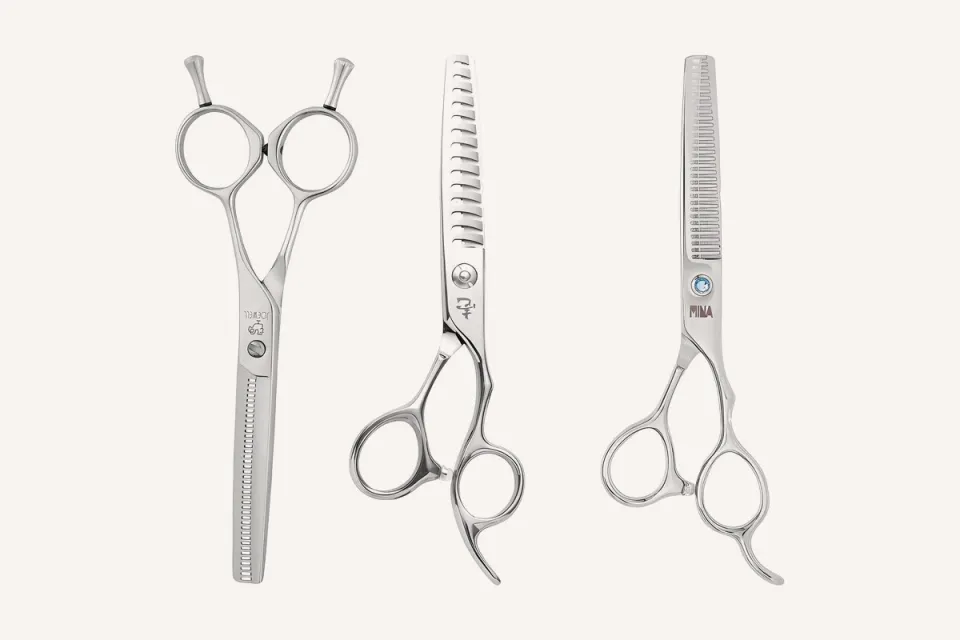
Both have teeth, so they cut only some of the hair in each close. A thinner (or blender) has fine, close teeth and softens weight. A texturiser has fewer, wider teeth and takes out visible pieces. Makers use the names loosely, so look at the tooth count and spacing.
Do more teeth mean a better thinner?
No. Tooth count is one detail, not a score. Spacing and shape decide how much hair each close takes, which Joewell’s thinning guide calls the cut ratio. Whatever you buy, start with one light pass and check before the next.
Size and fit
Does 5.5” mean the blade is 5.5” long?
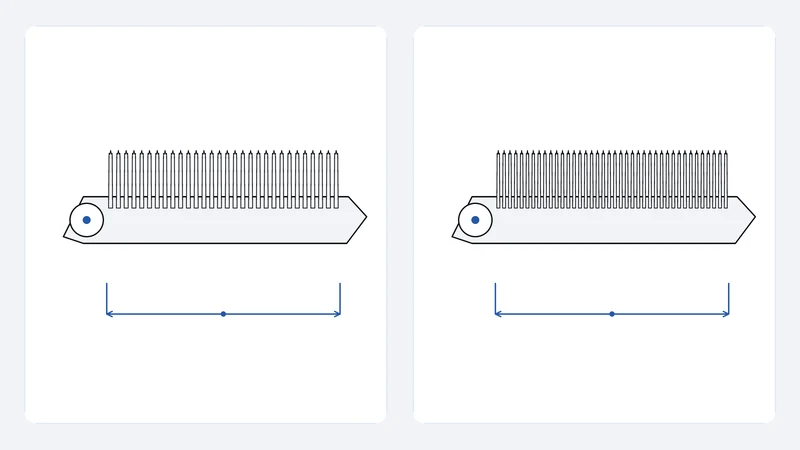
No. The inch size is the whole scissor. Yasaka’s SA-5.5 is 147 mm overall with a 60 mm blade, while Joewell’s FX-L55 has a 54 mm blade at the same 5.5”. Compare blade lengths when the maker lists them.
- Overall length: the inch size
- Blade length: pivot to tip
The inch size is the whole scissor. Makers differ on whether a finger rest counts.
The blade is the part that cuts. Two pairs with the same inch size can have different blades.
Does long hair need longer scissors?
Not always. Choose the length for the move, not the hair. A 6.0” or 6.5” blade covers more of a wide section, but you’ll still want a shorter pair for face framing and fringes. See which scissors suit long hair for a pick.
What does a swivel thumb change?
The thumb ring turns on a joint, so it follows your thumb as your hand rotates. Double-swivel models turn the finger ring too. They take some getting used to, so they’re better as a second pair. To try one cheaply, the Mina Sakura Double Swivel is A$144.95.
What are the pivot and finger rest?
The pivot is where the blades turn, and its screw sets the tension. The finger rest is the hook your little finger sits on. Some screw off and some are fixed.
- Finger rings
Where your thumb and fingers go. A ring insert makes a loose ring smaller.
- Handles
Join the rings to the pivot. Straight, offset or crane changes your grip.
- Pivot
Where the blades turn. The screw here sets the tension.
- Blades
Everything past the pivot. The edge decides how the scissor cuts.
- Tips
Where point cutting and close detail happen.
- Finger rest
A hook for your little finger. Some screw off, some are fixed.
Blades and brands
Is convex the same as sword?
No. Convex is the edge: the outer face curves down to the cutting edge. Sword is the blade body: a raised ridge runs along it. One blade can be both, so read the edge as well as the shape. The blade guide has drawings of each.
Does a Japanese brand mean the scissors are made in Japan?
Not always. Where a brand is based and where a model is made are two different facts, so read the model’s own wording. “Made in Japan” and “Finished in Japan” mean different things too. Our Japanese scissor brands guide covers who each maker is and where it’s based.
Barbers, arrival and care
Do barbers need different scissors?
Usually a longer cutter. A 6.5” or 7.0” blade covers more of the comb in scissor-over-comb, and a blender softens the line between clipper and scissor work. The barber range has both.
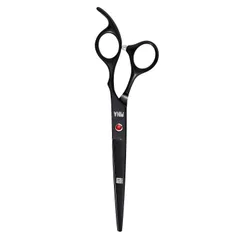
Mina Dark Gem Cutting Scissors
Best for scissor-over-comb on a budget (6.5” or 7.0”)
A$134.95
View Mina Dark Gem Cutting ScissorsWhat should I check when they arrive?
Before you cut anything, match the model, hand, size and contents to your order, then look the blades over. If something’s wrong, contact the seller before you use them. The arrival checklist walks you through it.
How do I look after them?
Brush off the hair and wipe the blades after every client. Dry them properly and store them closed, in their own slot or case. Oil the pivot only if your maker says to. The cleaning guide has the full routine.
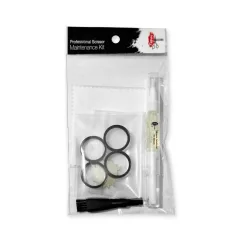
Maintenance Kit: Clean, Oil & Fix Hair Scissors
Best for keeping a cloth, brush and oil at your station
When should I upgrade?
When you can name what your first pair can’t do: more reach, a different handle or an edge for a technique you’ve learnt. If a pair that used to cut well starts folding hair, get it sharpened before you replace it. The upgrade guide helps you decide.
Still deciding?
The scissor finder asks four questions (tool, hand, size and budget) and shows the exact option to pick.
Comparing scissors for your kit?
Tell us what you cut and which scissors you are comparing.
Useful next reading
Read all blog posts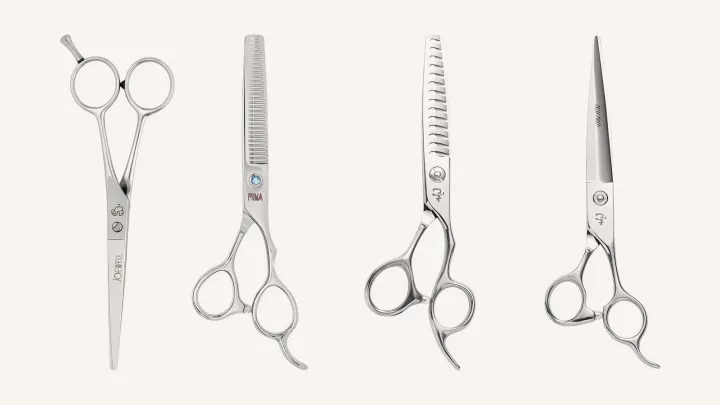
Types of Hairdressing Scissors and When to Use Each
Cutters, thinners, texturisers and long barber scissors: what each type does, when you need it, and one real pick with its price for every type.
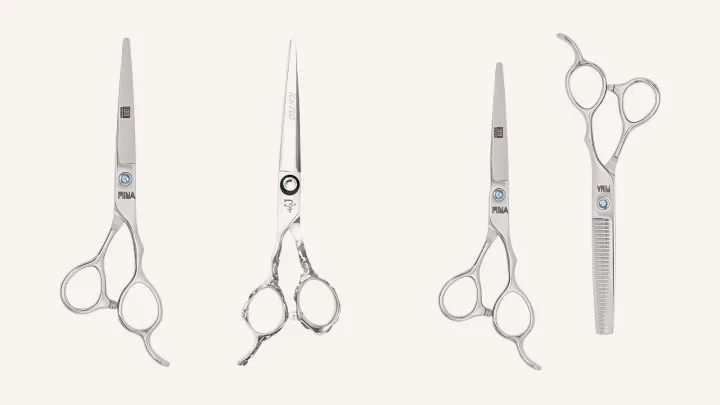
7 Mistakes When Buying Your First Hair Cutting Scissors
Wrong size, wrong hand, a set you don’t need, chasing steel, poor fit, no care budget and an unclear seller: the 7 first-pair mistakes and their fixes.