Your First Week in a Salon: Scissors, Habits, Questions
By SalonScissors editorial team Updated
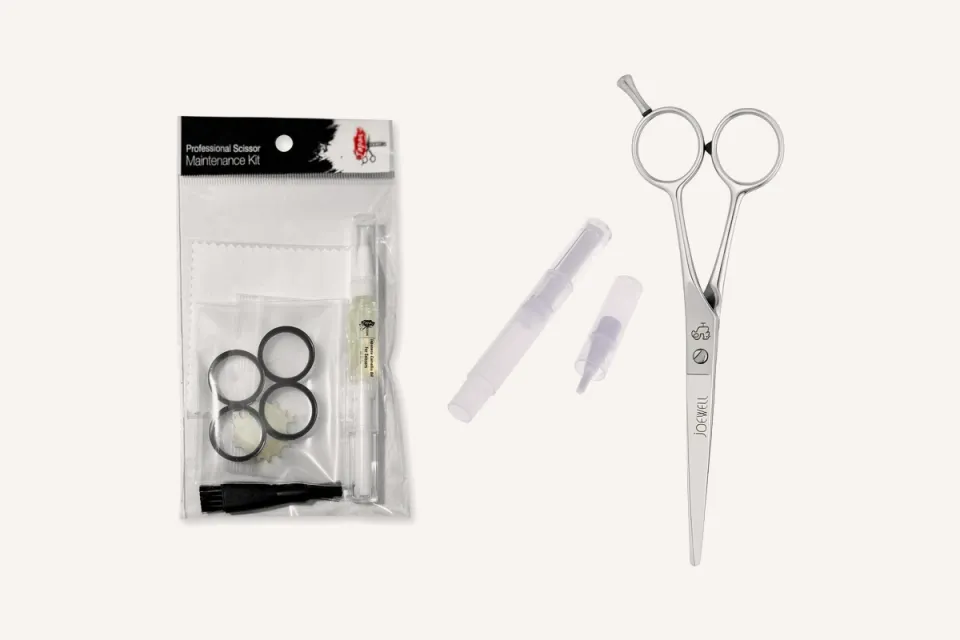
Your first week is mostly about habits: how you carry your scissors, where they go between clients and who you ask before you cut. Get those right and the haircuts have a safe place to start.
How we chose: Habits follow maker care pages and our apprentice guides. Reviewed 4 November 2026. Your salon’s own rules come first. We sell scissors and haven’t run cutting tests.
Who it’s for
- Salon
- Apprentice
Skip it if you’re still choosing your first pair
This page is about the week you start, not the pair you buy. If you’re still choosing, our apprentice and TAFE kit guide covers what to buy first and what can wait.
What should you carry on day one?
Keep it small. A first-week bag needs only what protects the scissors and keeps them clean.
| Bring | Why | Check first |
|---|---|---|
| Your scissors, in a case or holster | Edges are the most delicate part, and loose pairs get knocked | Does the salon want a holster on your hip or a case in your station drawer? |
| A soft cloth and a small brush | Hair and moisture are what you deal with between clients | Your maker’s care page, for oil. Some pairs need none |
| A note to yourself | Salon rules are easy to forget on a first day | Write down where things go and who to ask |
| Nothing else sharp | Extra tools get lent, lost or dropped | Ask what the salon supplies |
A pair you use at home, or one that wasn’t made for client work, may not be what your salon expects. Our guide to home and professional scissors explains how to judge a pair, and your boss decides what’s allowed.
What should you ask before you pick up your scissors?
Ask these on day one, before you need the answers.
- Who can I cut on, and when? Your salon decides the order, and it may start with mannequins.
- Which tools does the salon supply, and which do I bring? Don’t assume.
- Where do my scissors live between clients? A holster, a case or a drawer, and which side of the station.
- What’s the hygiene routine for tools? Your state’s hairdressing rules and the salon’s own procedure apply to anything that touches a client.
- What do I do if I drop or damage a pair? Know who to tell. Our dropped scissors plan shows what to do next.
- Is there a spare I can use if mine goes away for service?
Where should your scissors live on the floor?
In a holster or case, closed, with the tips covered. Not in a pocket, not loose on the trolley and not open on the station while you answer the phone.
Two habits help from the first day:
- Pass them closed, handles first. If someone asks to look at your pair, hand them over that way.
- Keep them with you. A pair left at the basin or beside the colour bench gets knocked, splashed or picked up by someone else.
Lending your scissors is the habit to avoid most. Once a pair has passed through other hands, you can’t tell when a knock happened.
What does a week-one care routine look like?
Short. Between clients, brush off the loose hair, wipe both blades with a dry cloth, dry the pivot and put the pair away.
Our salon-day routine covers the full day. After colour or perm work, read how to protect your scissors at the colour bench.
What goes wrong in a first week?
- Cutting things that aren’t hair. Clips, foils, tape and packaging dull and nick an edge. Use a different tool.
- Adjusting the tension screw because the pair “feels different”. A new pair always feels new. Follow your maker’s check and ask before you turn anything.
- Carrying on after a drop. If something catches, clicks or feels changed, stop. See our backup scissors plan so you’re not stuck without a pair.
- Putting them away damp. Dry first.
- Judging the pair on one awkward client. Technique takes time. If hair keeps folding or pushing after the pair is clean and checked, read our guide to dragging scissors.
How do you know if the scissors or your technique is the problem?
Start with the pair. Is it clean, dry and moving freely? Does it catch at one spot, or fold hair along the whole edge? A catch at one point after a knock is a service job. General awkwardness in your first weeks is usually practice. A teacher or senior stylist can watch you cut and tell the difference faster than you can.
Common questions
Should I bring my own scissors on day one?
Ask before you start. Some salons supply tools for new apprentices and some expect your own pair. If you’re told to bring them, keep them in a case and follow the salon’s rules for when you can use them.
Can I use my home scissors at the salon?
Ask your boss first. Tools used on clients fall under your state’s hygiene rules and your salon’s procedure, and a pair made for light home trims may not suit daily work. See our home and professional scissors guide.
Do I need a thinner in my first week?
Only if your course or salon asks for one. A single cutter covers most early work.
What if I drop my scissors in front of a client?
Stop using them and tell your supervisor. A drop can chip an edge or change the alignment with nothing visible, so book a check before you cut with them again.
Next step
Before your first busy day, read the dropped scissors plan, so you know what to do before it happens.
Further reading
For a reference on scissor terms, Scissorpedia is an information site about hair scissors. SalonScissors is part of the ShearAlliance, working with other trusted scissor websites. More topics are in the knowledge base.