Home Hair Scissors vs Professional Scissors: What Differs
By SalonScissors editorial team Updated
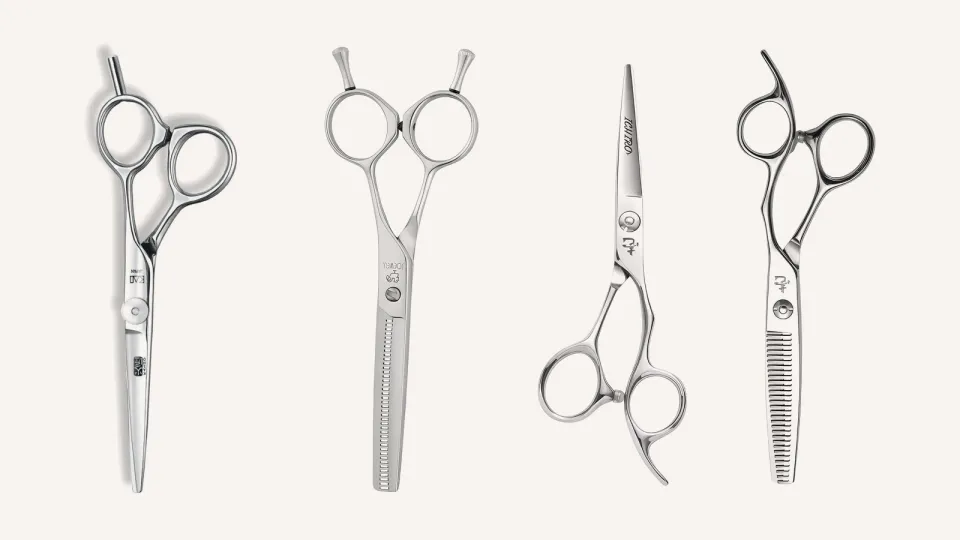
“Professional” isn’t a measurement, so the word won’t tell you what a pair is. What separates home-use scissors from professional ones is the work they suit, what the maker documents, and whether the pair can be adjusted, fitted and serviced afterwards.
How we chose: General guidance from maker documentation and trade practice, with no brand comparisons. Reviewed 4 November 2026. We sell professional scissors and haven’t run cutting tests.
Who it’s for
- Salon
- Apprentice
Skip it if you already cut clients every day
What is the real difference between home and professional scissors?
There’s no trade standard that says what a home pair must be, or what makes a pair professional. So the difference isn’t a category. It’s a set of questions, and some pairs answer them better than others.
The first is workload. A pair used for a trim every few months has an easy life. A pair used on client after client has to hold up to cleaning, tension checks, knocks and sharpening.
The rest come down to what the maker tells you and what you can do afterwards.
What should you check on any pair?
Ask these seven questions of any scissors, whatever the packet says. A pair that answers all of them is documented for ongoing use. A pair that answers few leaves you guessing.
| Question | Why it matters | Where to look |
|---|---|---|
| What does the maker say it’s for? | Intended use is what the maker stands behind | The product page and care sheet |
| Which edge type is named? | The edge decides which techniques it suits | Our edge guide |
| Can you adjust the tension, and does the maker explain how? | Tension needs rechecking as a pair is used | The maker’s care page |
| Which hand, and which handle? | A left-handed pair is built differently, not just shaped differently | Our left-handed guide |
| What are the blade length and overall length? | Fit and reach depend on the measurements | Our length guide |
| Can a qualified sharpener service this pair? | Edge life depends on service as well as steel | Our guide to what to ask a sharpener |
| What are the returns and warranty terms? | You can check fit before you’re committed | The seller’s returns page |
If a listing can’t answer a question, treat the answer as unknown. Unknown isn’t the same as bad, but it’s a reason to ask before you buy.
When are home scissors enough?
For an occasional trim of straight lines on your own or family hair, a simple home pair can do the job. You don’t need a specialist edge to take a little off the ends.
Keep the jobs simple. Point cutting, slide cutting and texturising take training, and they ask more of an edge and your control. Around ears and skin, keep the tips under control and stop if the person moves.
When should you move to a professional pair?
Step up when any of these is true:
- You cut clients. Apprentices and stylists need a pair with documented care, tension adjustment and a service route.
- You cut most days. Daily use is what care routines and sharpening are for.
- You need a technique-specific edge. Our edge guide shows how edge types differ.
- You need a true left-handed pair. Our left-handed collection lists what we stock.
- Your course or salon asks for one. Check the kit list first. Our apprentice and TAFE kit guide covers the order to buy in.
Can you use a home pair at work?
Ask your boss. Tools used on clients fall under your state’s hairdressing hygiene rules and your salon’s own procedure, and some salons decide what’s allowed on the floor. A pair that was made for light home trims may not suit that routine, so don’t assume.
What mistakes do buyers make?
- Buying on the word “professional”. Check the seven questions above instead.
- Choosing on a photo. Two pairs that look the same can have different edges, sizes and hands.
- Using hair scissors on paper, tape or packaging. That dulls and nicks an edge. Keep a separate tool for other materials.
- Tightening the tension screw to fix folding hair. Follow your maker’s method. If hair keeps folding or pushing, read our guide to dragging scissors.
- Skipping care. Any hair scissors do better dry, closed and clean. See our care guide.
Common questions
Are home hair scissors lower quality?
No standard says so. Some are fine for occasional trims. What matters is what the maker documents and how much work you’ll ask of the pair.
Is “professional” a regulated word?
It isn’t a specification. Check the maker’s description of that exact model, and don’t rely on the word.
Can I sharpen home scissors myself?
Edge work belongs with a qualified professional for any pair. A home attempt can permanently change the geometry. See what to ask a sharpener.
What’s a sensible first step up from a home pair?
Use our scissor finder to narrow a pair by hand, length and budget, or start with our guide to choosing scissors.
Next step
Ready to compare? Browse cutting scissors, or read how to choose scissors for the work you do.
Further reading
For a general reference on hair scissors, Scissorpedia is an information site. SalonScissors is part of the ShearAlliance, working with other trusted scissor websites. More topics are in the knowledge base.