How to Choose Salon Scissors
A quick way to choose salon scissors by your cutting work, blade length, handle and budget.
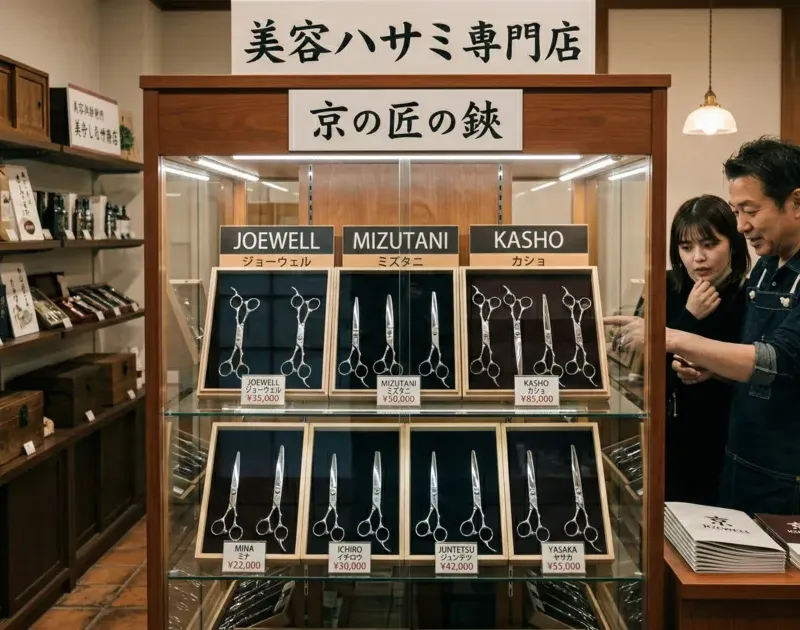
Start with the cut you do most
Think about where your current scissors slow you down. Is it a blunt line, a slide cut, detailed work around the face, or scissor-over-comb? That answer is more useful than starting with a brand.
Choose a length
- Shorter blades: More control for detail, fringes and close work.
- Middle lengths: Flexible for a mixed salon day.
- Longer blades: More reach for over-comb work and longer cutting strokes.
There is no size that suits every stylist. Check the size options on the individual listing, especially when a product has several variants.
Choose a handle you can control
Classic, offset, crane and swivel handles place the thumb differently. Pick a shape that lets you open and close the blades without forcing your grip. Finger inserts can fine-tune the fit. If discomfort is persistent, speak with a qualified health professional rather than expecting a handle change to solve it.
Match the edge to your technique
A convex edge is often chosen for smooth slicing. A bevelled or serrated edge gives a different feel and can help hold a section during a straight cut. Read the model’s edge description; do not assume every scissor from one maker is built the same way.
Buy the missing tool
A reliable cutter comes first. Add a thinner for blending or a set if you need both. Keep budget for care and a backup pair. Then compare the actual sizes, contents and price on the product pages before you decide.
Notes for your salon kit
Cutting ideas, model comparisons and simple scissor care for busy stylists.