How to Compare Two Similar Pairs of Scissors Fairly
By SalonScissors editorial team Updated
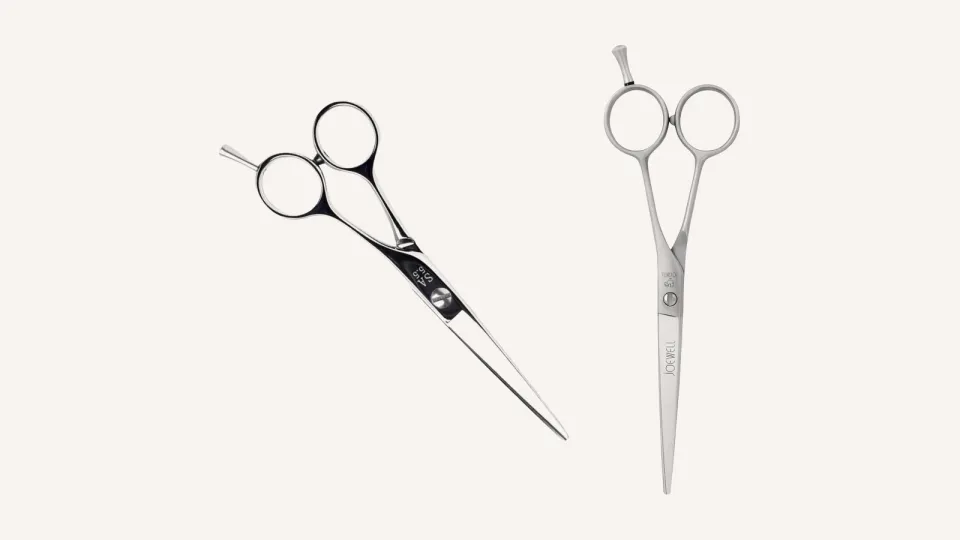
To compare two similar pairs fairly, put them on the same measures: hand, nominal size and blade length, handle, edge, what the maker says it’s for, then service, returns and price. Leave out claims you can’t check, such as “smoother” or “lasts longer”, and decide on the differences that change how you work.
How we chose: The method follows our buying guides and maker specification tables. Reviewed 4 November 2026. We sell scissors and haven’t run cutting tests, so we compare specs, not feel.
What makes a comparison unfair?
Two pairs can look alike and still differ on the things that matter. The usual traps are comparing a nominal size with a blade length, comparing a steel name with an edge, trusting adjectives such as “premium” or “smooth”, and comparing prices without comparing what each includes. A fair comparison removes these so the real differences are left.
It also helps to separate two kinds of difference. Some are facts you can read off a page, such as hand, size, handle and edge. Others are feel and fit, which only you can judge. Don’t let the second kind sneak into a spec table dressed up as a fact.
How do you compare two pairs, step by step?
-
Match the hand
Check the hand on both listings, and select the exact option. A right-handed and a left-handed pair aren’t comparable. Our guide for left-handed stylists explains why.
-
Compare the sizes the same way
Nominal size is the whole scissor, and blade length is pivot to tip. Compare one with the same one on the other pair, and use the maker’s own figures. Our length guide explains the difference.
-
Compare the handles
Straight, offset, crane or swivel, and the ring size. A handle changes how the pair sits in your hand. See our handle and hand posture guide.
-
Compare the edges
Convex, semi-convex, bevel or serrated, and what the maker says the model is for. Our edge guide translates each one.
-
Compare ownership, then price
Look at service, warranty, returns and the seller. Then look at price, current at the time you check.
What should the comparison table look like?
Copy this layout, and fill each cell from the listing or the maker’s page. Leave a cell blank if the maker doesn’t give the figure. Don’t guess.
| Measure | Pair A | Pair B |
|---|---|---|
| Hand | ||
| Nominal size | ||
| Blade length (maker’s figure) | ||
| Handle layout and ring fit | ||
| Edge and finish | ||
| What the maker says it’s for | ||
| Weight (only if the maker states it) | ||
| Service and warranty | ||
| Returns terms | ||
| Current price |
Two blank cells don’t make a pair worse. They just mean you need to ask the seller before you decide. Our size guide shows how to measure and compare, and our guide to reading product photos covers what a photo can and can’t tell you.
Which differences should you weigh most?
| Difference | How much it should count |
|---|---|
| Hand | Decisive. It has to match. |
| Blade length and handle fit | High, because they change how you cut |
| Edge and what the model is for | High if you do slide cutting or blunt work |
| Service and warranty | Medium to high, because you’ll rely on it |
| Steel name | Low. See our steel library. |
| Colour and finish | Low, unless it affects care |
| Price gap | Weigh against the rest, not by itself |
What mistakes do buyers make?
- Comparing a blade length with a nominal size.
- Letting a steel name decide. Steel is one part of the scissor.
- Believing feel claims such as “smoother” or “lighter” from a listing, when no one has measured it.
- Ignoring the seller. Our authenticity checklist lists what to check.
- Comparing prices without scope. A cutter and a set aren’t the same product.
- Skipping the fit check once it arrives. Use our first-use fit check.
For worked examples at brand level, see Yasaka versus Joewell and Mina versus Ichiro.
What does a fair comparison look like in practice?
Imagine two right-handed 5.5” cutters with offset handles. Pair A is described by its maker as a smooth convex edge for slide cutting, and Pair B as a bevelled edge for blunt lines. The nominal size and handle match, so the choice now comes down to the work you do. If you slide cut and soften a lot, Pair A fits. If most of your day is solid lines on wet hair, Pair B does.
Now suppose Pair B costs more. Don’t read the price as a verdict. Look at what the extra buys: a different blade length, a better fit for your ring size, or service from the maker. If it buys nothing you need, the cheaper pair wins. This is an invented example, to show the method.
Common questions
How do I compare scissors with similar names?
Compare the exact option on each listing: hand, size, handle and edge. Similar names can sit on very different pairs, and the same family can have several versions.
Is the more expensive pair better?
Not by price alone. A higher price may buy a different handle, blade shape or hand, or better service. Compare what each price includes against what you need.
Can I compare scissors by weight?
Only if the maker states a weight. Most listings don’t, and a light name isn’t a weight. Balance and ring fit change how a pair feels too.
What if the listing doesn’t give a figure I need?
Leave the cell blank and ask the seller. We’re happy to help if you contact us with the two models you’re weighing.
Next step
Have two pairs in mind? Run them through the table, then use the premium purchase checklist before you buy, or ask us to check the specs.
Further reading
For a reference on scissor specifications, Scissorpedia is an information site about hair scissors. Scissorpedia is a fellow member of the ShearAlliance (see ShearAlliance). More topics are in the knowledge base.