How to Choose Thinning and Texturising Scissors
By SalonScissors editorial team Updated
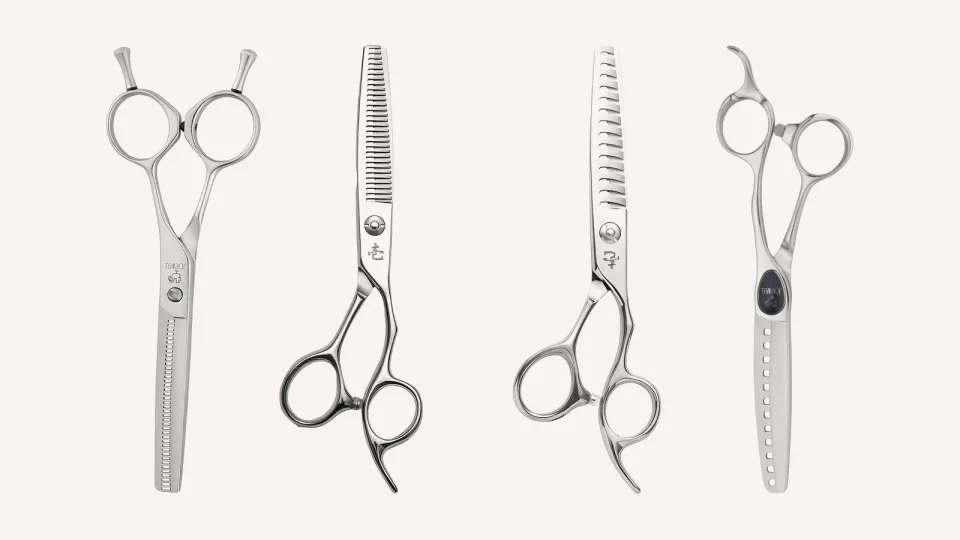
Thinning scissors soften and take out weight inside a cut; texturisers take out visible pieces to add movement. Choose by the job first, then by cut ratio.
How we chose: One pick per job from our range, chosen on maker specs, listings, cut ratios and price. We sell them and haven’t run cutting tests. Prices checked 26 October 2026.
Thinner, blender, texturiser or chunker?
| Tool | What it does | Teeth in our range |
|---|---|---|
| Blender | Softens lines and blends | 30–40, close-set |
| Thinner | Takes bulk out inside the shape | Usually 30 |
| Texturiser | Takes out visible pieces for movement | 15–21, wide-set |
| Chunker or cut-thinner | Cuts texture in, close to a cutter | 10–14 |
Listings use these names loosely, so go by the teeth and the cut ratio, not the label on the box.
Spacing: close or wide
Close-set teeth spread the cut for a soft blend. Wide-set teeth take out separate pieces you can see, which is texture.
Tips: flat or notched
The shape of each tip changes how hair is caught. Joewell’s SNT-40, for one, cuts single hairs at its tooth tips.
Which one does each job need?
- Soften a weight line or blend a graduation: a 30–40-tooth blender, around 15–25%. The Ichiro Ergo or Joewell’s E30, which Joewell rates at 15%.
- Take bulk out of thick hair: a higher ratio, about 30–35%. Joewell’s E40 is rated 35%, and the Texture Master’s H-style is listed at 30–35%.
- Visible texture and movement: wide-set teeth, like the Juntetsu Chomper 16 or the Ichiro 16T.
- Softening a clipper line: a blender, worked where the clipper and scissor work meet. The barber scissors guide has a blender and a texturiser for barbers.
- Fine hair or root volume: the lowest ratio you can find. Joewell’s SNT-40 is about 5% or less.
- Cutting texture in: a cut-thinner. Joewell rates its JGC-12 at about 80%.
- Left-handed: the Mina Umi thinner comes in Left for A$114.95, the same as Right.
Why does the cut ratio matter more than the teeth?
Because the shape of each tooth and the groove beside it change how much hair one close catches. Joewell says the cut ratio depends on both the count and the shape.
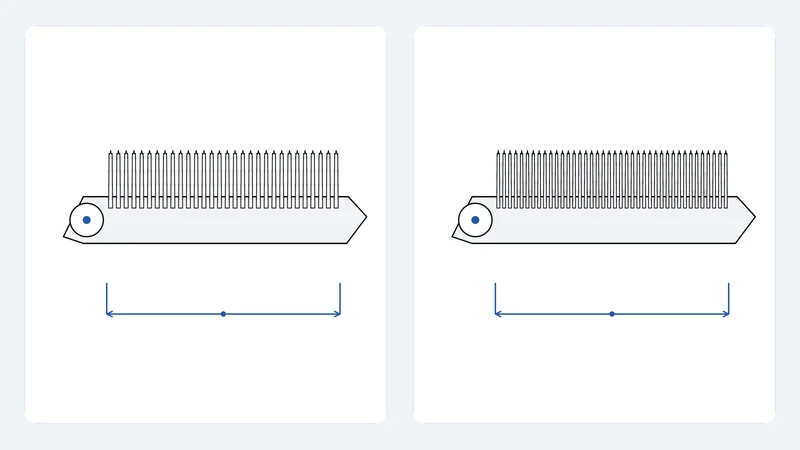
So compare ratios, not counts. The cut ratio guide lines up real figures from 5% to 80%.
Can you slide or stroke-cut with a thinner?
Only with one made for it. Joewell warns that “ordinary thinning scissors cannot be used as hair is caught” and recommends models that are “not easily caught and can be smoothly pulled out.” If the listing doesn’t say a thinner is built for sliding, open and close it in place instead.
How do you thin without overdoing it?
-
Finish the outline first
Cut the shape with your cutter, then decide where it needs weight out.
-
Take a small section, one close
Work inside the shape, away from the perimeter, so the line stays crisp.
-
Comb out and check the fall
Look at how the hair sits before you take another pass. You can always do more; you can’t put hair back.
Four thinners up close
Three Joewells and a Mina, with the maker’s cut ratio where Joewell gives one.
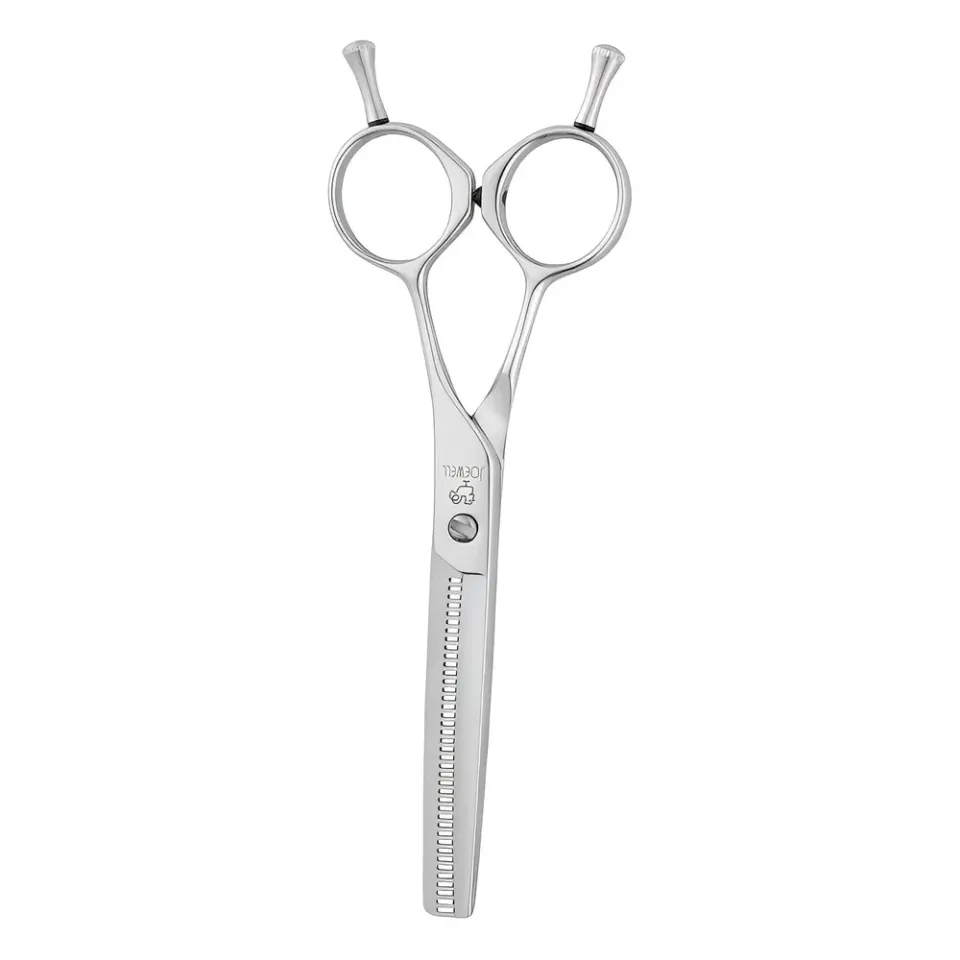
Joewell E40 Hairdressing Thinning Scissors
A$599
- Teeth
- 40
- Cut ratio
- 35%
Joewell’s basic 40-tooth thinner, with a symmetric handle.
Our listing doesn’t state the hand, so ask us before you order if you cut left-handed.
Joewell E-series specifications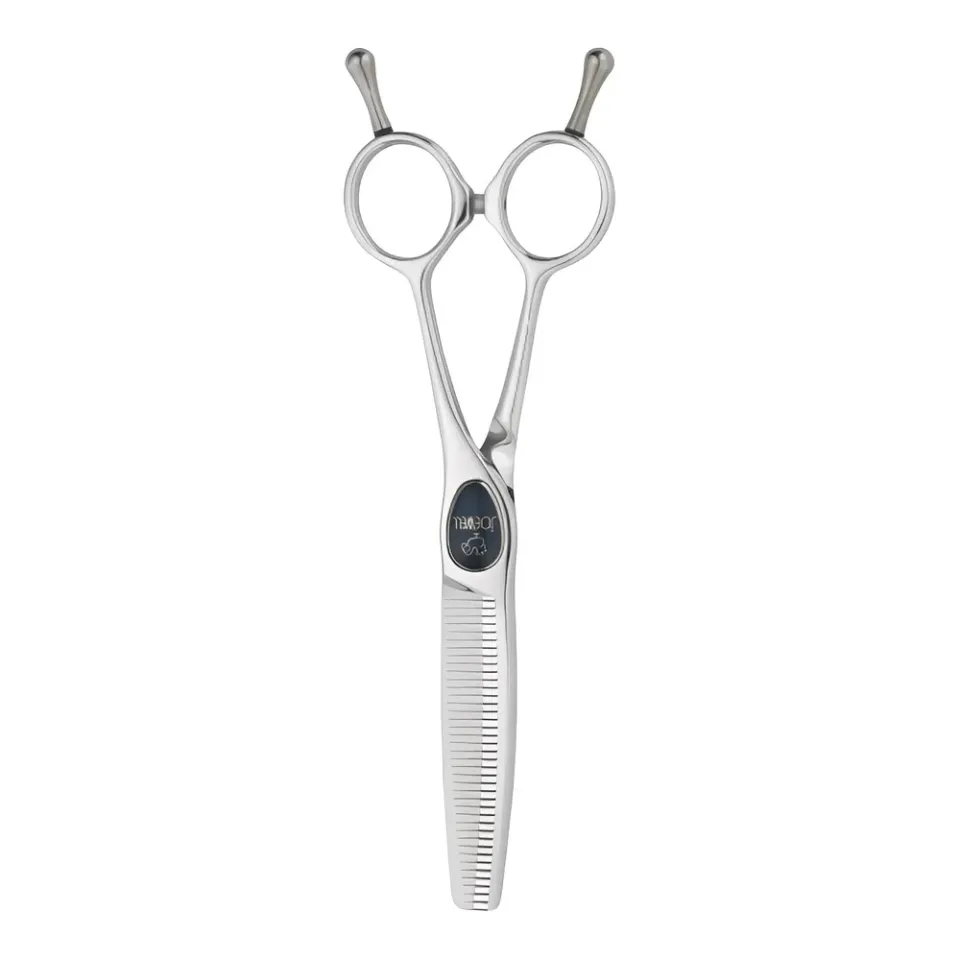
Joewell SNT-40 Volume Control Thinning Scissors
A$899
- Teeth
- 40
- Cut ratio
- About 5% or less
Volume control: it cuts single hairs at the tips of its 40 fine teeth.
Joewell’s pages give different sizes for the SNT-40, so ask us for the size and hand of the one we’d send.
Joewell SNT-40 specifications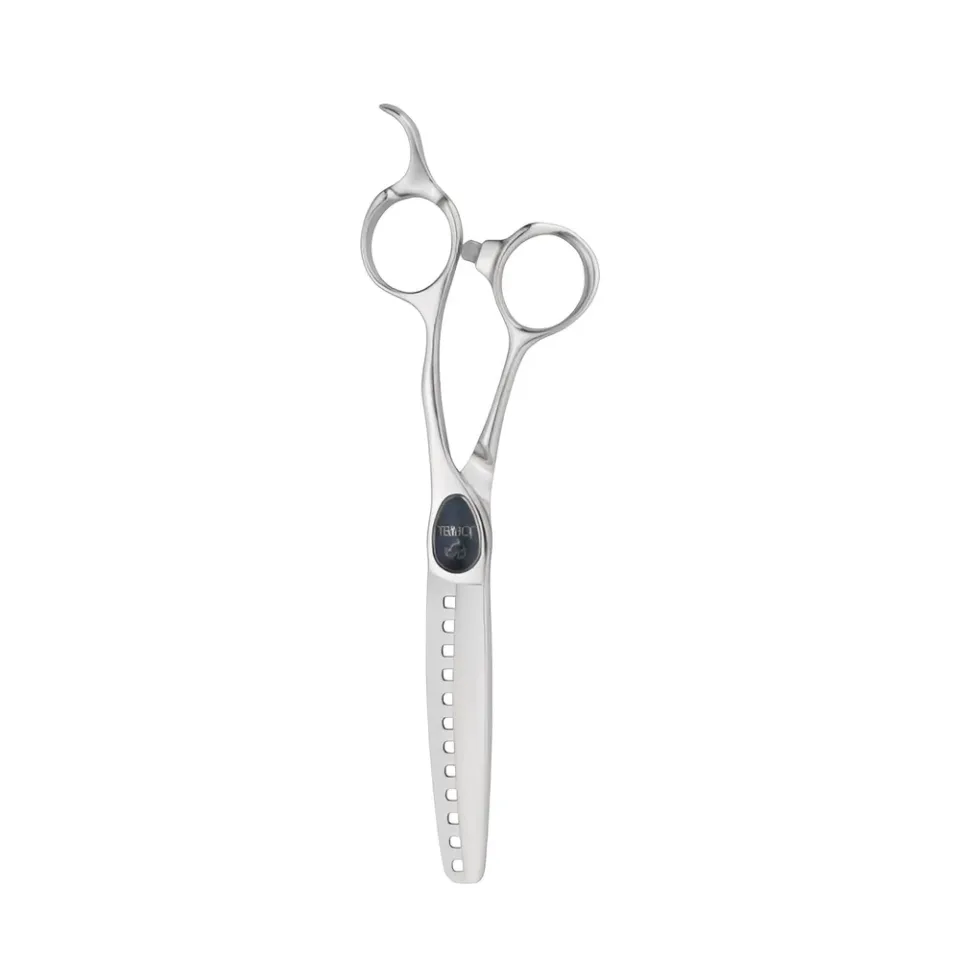
Joewell JGC-12 Cut & Thinning Scissors
A$899
- Teeth
- 12
- Cut ratio
- About 80%
A 12-tooth cut-thinner for cutting and texture in one.
Our listing doesn’t state the hand, so ask us before you order if you cut left-handed.
Joewell JGC-12 specifications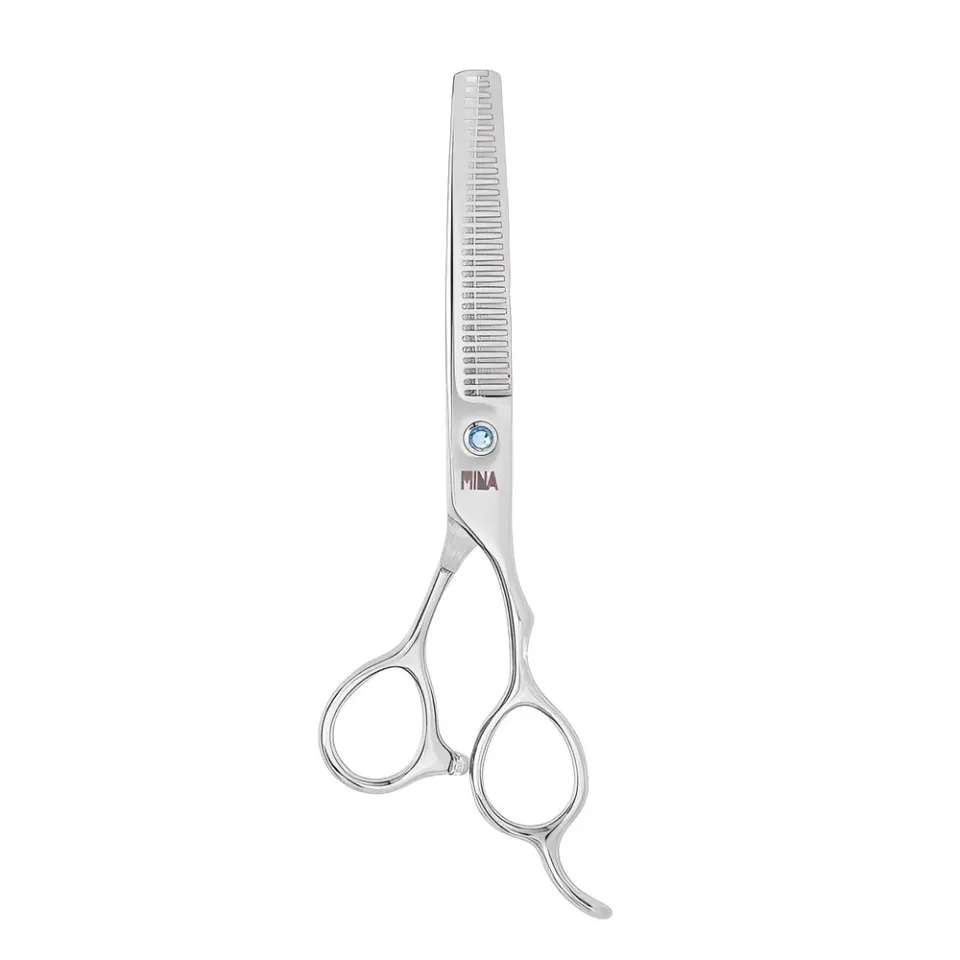
Mina Umi Hair Thinning Scissors
A$114.95
- Hand
- Right
- Size
- 6.0”
A 6.0” thinner with V-shaped teeth.
Choose Right or Left on the product page; both are the same price.
Common questions
What’s the difference between thinning and texturising scissors?
Thinning scissors have close-set teeth that blend and take out bulk without a visible line. Texturisers have fewer, wider-set teeth that take out visible pieces for movement and separation.
How many teeth should thinning scissors have?
30 is the most common blender count in our range, and 40 is finer. Then check the cut ratio, which tells you more than the count.
Do apprentices need thinning scissors?
Not on day one. Learn your outlines with a cutter, then add a 30-tooth blender when your course asks for one, such as the Ichiro Ergo thinner.
Should my thinner match my cutter?
Match the hand and, ideally, the handle shape, so both feel familiar. The steel and brand don’t need to match.
Next step
Want to see every option side by side? Browse the thinning scissors range, or compare ten picks in our top 10 thinning scissors.
Already own a thinner? The top 10 tips for thinning and texturising scissors shows how to use it.