Ride Line, Blade Set and Bumper: What They Do
By SalonScissors editorial team Updated
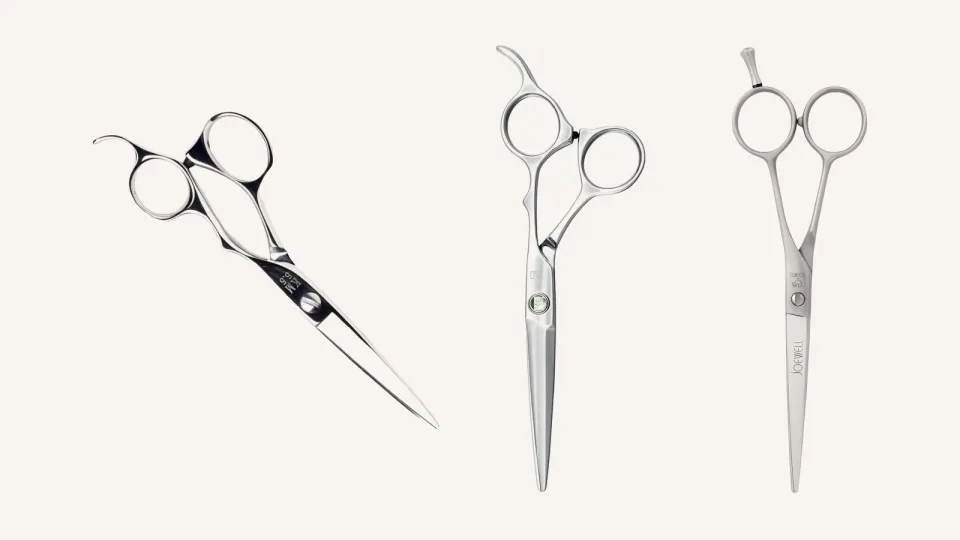
Three small parts change how a pair of scissors closes, and most stylists never see them: the ride line, the blade set and the bumper. None of them is the tension screw, and a change in any one is a job for a qualified professional.
How we chose: Definitions follow trade terminology and maker diagrams. Geometry varies by model, so follow your maker’s own diagram. Reviewed 4 November 2026. We sell scissors and haven’t run cutting tests.
Who it’s for
- Salon
- Barber
- Apprentice
- Left-handed
What is the ride line?
The ride line is the narrow contact region on the inside face of each blade. On many pairs the inner face is hollowed out, so the blades touch along a narrow band instead of rubbing across their full width. Less contact generally means less friction, and it’s part of how the stroke feels.
You can’t see it with the pair closed, and it isn’t a coloured stripe or a decorative polish line. Makers build it in, and the exact geometry differs between models. Our convex edge guide explains the hollow inner face and how it differs from the outer edge shape.
What is blade set?
Blade set describes how the maker sets the two blades against each other. Done well, the blades meet progressively as they close and press together lightly, which is what lets them cut instead of fold the hair.
Set is built in at manufacture. The tension screw sits on top of it: the screw changes how firmly the blades are held together, within what the set allows. That’s why too much set can read as a stiff action the screw can’t cure, and too little can let hair fold. A drop can change set, sometimes with nothing visible.
What does the bumper do?
The bumper, also sold as a stopper or silencer, is a small cushion between the handles. It limits how far the handles close and softens the knock at the end of the stroke. Our glossary entry for bumper lists the other names it goes by.
A worn or missing bumper is a service issue, not a sharpening one. The handles can knock harder, the stop can sound louder and the closing travel changes. Ask for a matching part, because a bumper that fits one model won’t necessarily fit another.
Which symptom points to which part?
Several causes look alike, so check in this order: clean and dry the pair, run your maker’s tension check, then look at these three.
| What you notice | What could be behind it | What to do |
|---|---|---|
| Stiff through the whole stroke after a clean, dry and tension check | Set or the ride line, or early corrosion | Note that it persists, then ask a professional. Don’t tighten or loosen to chase it |
| Hair folds or pushes with the pair clean and the tension right | Edge wear, alignment or set | Test on one small section. If it persists, stop and book a service |
| Blades feel loose at the pivot whatever the screw setting | Worn washers, a worn contact region or set | Don’t keep tightening. Get the pair assessed |
| Loud or hard stop at the end of the stroke | A worn or missing bumper | Look between the handles, keeping fingers off the edge. Ask a professional for a matching part |
| A click or catch after a drop | A nick, changed alignment or set, or a damaged pivot or bumper | Stop. Don’t cycle the blades, and see our dropped scissors plan |
What can you adjust yourself, and what can’t you?
You can brush, wipe, dry and oil the pair as your maker directs, and you can check and adjust tension by the maker’s method in small steps. Our care guide and the maker care instructions cover those.
You can’t safely change the ride line, the set or the bumper at the screw. Reshaping the inside faces or replacing parts needs the right equipment and skill, and a home attempt can permanently change how the blades meet.
What should you ask a sharpener?
Work on the inside faces needs care, because removing material there changes how the blades meet. Ask:
- Do you work on this exact edge type and inner face?
- What did you do to the inside faces?
- Did you check the closing action, the alignment and the bumper afterwards?
Our guide to what to ask a sharpener has the full list, and how to describe a problem helps you write the service note. “It’s stiff even after cleaning and tension” tells a sharpener far more than “it feels off”.
What mistakes do people make with these parts?
- Tightening the screw to cure a set problem. It won’t fix it and it adds wear.
- Treating the ride line as a mark to polish. It’s a working contact region, not a finish.
- Assuming any bumper fits. Match it to the model.
- Ignoring a click after a drop. It can be set, alignment or the bumper.
- Cycling a pair that catches. Repeated closing against a fault can add to the damage.
Common questions
Is the ride line the same as the cutting edge?
No. The cutting edge is the sharpened line on the outside of each blade. The ride line is the contact region on the inside face.
Can I see my ride line?
Not with the pair closed. Looking at the inside faces is fine, but keep your fingers off the edge and don’t try to change anything.
Do all scissors have a bumper?
Many do, and some use a different stopper arrangement. Check your model’s diagram.
Can the tension screw fix a tight pair?
Sometimes, when tension is the cause. Run your maker’s check first. If the stiffness stays after a clean, dry and tension check, ask a professional.
Next step
Your pair feels different and you’re not sure why? Work through our guide to dragging scissors first, then book a service if it persists.
Further reading
For definitions of scissor parts, Scissorpedia is an information site about hair scissors. SalonScissors is part of the ShearAlliance, working with other trusted scissor websites. More topics are in the knowledge base.