Looking After Scissors When You Travel or Work Mobile
By SalonScissors editorial team Updated
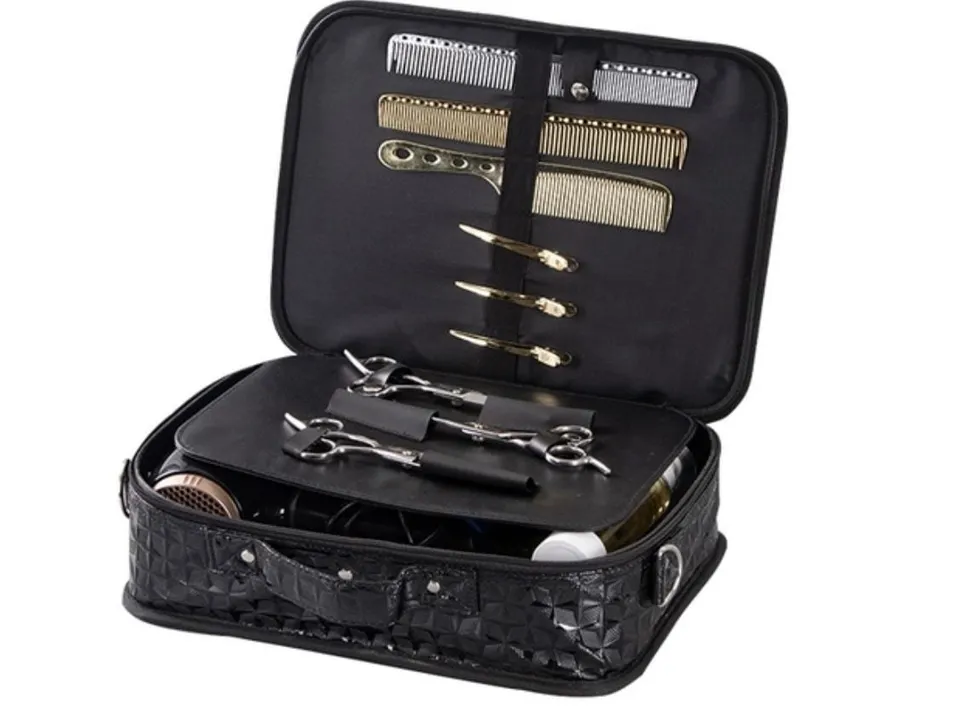
When you work away from a salon, the risks to your scissors are knocks, moisture and mix-ups. Carry each pair closed, in its own slot or sleeve, inside a case that doesn’t let tools slide. Dry them before you pack, keep clean and used tools apart, and look them over after any bump.
How we chose: Advice follows our care guides and maker care pages. Reviewed 4 November 2026. We sell the carry cases shown and haven’t run cutting tests. Check travel rules for each trip.
What are the risks when you work on the move?
At a fixed station, your scissors live in one place. On the road they spend time in bags, cars and unfamiliar rooms. That brings three risks.
- Knocks. Tips and edges are fragile. A pair sliding against combs or clips in a bag can pick up a nick.
- Moisture. Damp blades packed away closed can sit with moisture near the pivot. Our salon-day care routine explains why drying matters.
- Mix-ups. With several clients and a shared kit, it’s easy to put a used pair back with clean ones.
How do you pack and carry scissors?
-
Give each pair its own place
Use a case with a slot for each tool, so scissors don’t rub against each other, combs or clips. Keep the case closed and upright where you can.
-
Separate clean and used tools
Keep a clearly marked place for used tools, and another for clean ones. Follow your state’s rules on cleaning and disinfecting between clients.
What case suits mobile work?
The right case holds each pair still, with the blades closed, and keeps the tips from touching anything. A single sleeve or pouch suits one pair. A multi-slot case or a toolbox suits a working kit with scissors, combs and clips. Our accessories guide compares sleeves, cases, holsters and toolboxes, and our accessories collection lists them.
A decorative case isn’t proof of hygiene. Choose one you can wipe down and keep dry, and clean it as part of your routine.
What about flying, posting and cars?
Rules for carrying scissors on aircraft differ by country, airport and airline, so check the current rules for your trip before you pack, and don’t rely on a past experience. If you post scissors for service, pack them closed and cushioned, and follow our guide to preparing scissors for sharpening. Australia Post has information on sending items and insurance.
In a vehicle, keep scissors in a case on the seat or in a bag you can reach, so they aren’t sliding around, and don’t leave a damp pair packed away for hours.
What if a pair gets knocked or dropped?
Stop using it, and look it over before it goes back into your hand. A nick, bent tip or a pair that catches needs a service, not more force. Our guide to dropped scissors walks through what to do. This is also why a spare pair matters for mobile work: you can’t borrow one if yours is out. See our backup scissors guide.
What mistakes should you avoid?
- Loose scissors in a bag. Use a slot or sleeve.
- Packing damp. Dry them first.
- Mixing clean and used tools.
- Ignoring local rules for mobile services. Check what your state or local council requires.
- Travelling without a spare. A single pair is a single point of failure.
- Forgetting the post-trip check. Look at the blades before the first client.
What goes in a mobile kit?
A simple checklist keeps nothing forgotten:
- A cutter in your hand, and a spare
- A thinner if you use one
- A sleeve or slot for each pair
- A care kit: cloth, brush and oil if your maker says to use it
- A clean-tool and used-tool container
- Combs and clips, in their own pocket
- Your hygiene supplies, as your state requires
Review it after each job and replace what’s low. Our salon tool audit works for a mobile kit too.
Common questions
How should I carry scissors in my car?
Closed, in a case or sleeve, and secured so they can’t slide. Don’t leave a damp pair packed away for hours.
Can I take hair scissors on a plane?
Rules differ by country, airport and airline, and they change. Check the current rules for your route before you pack.
Do mobile hairdressers need a different care routine?
The routine is the same: brush, wipe, dry and store closed. The extra work is packing, keeping clean and used tools apart and following your state’s rules.
What should I carry as a backup?
A spare cutter in your hand, and a thinner if you use one. Pack it in its own slot. See our backup scissors guide.
Next step
Choose a case that fits your kit: browse accessories, or read the accessories guide for what each one does. For the full care picture, see our care guide.
Further reading
For a reference on scissor care, Scissorpedia is an information site about hair scissors. Scissorpedia is a fellow member of the ShearAlliance (see ShearAlliance). More topics are in the knowledge base.