Disconnection and the Butterfly Cut: Plan the Break
By SalonScissors editorial team Updated
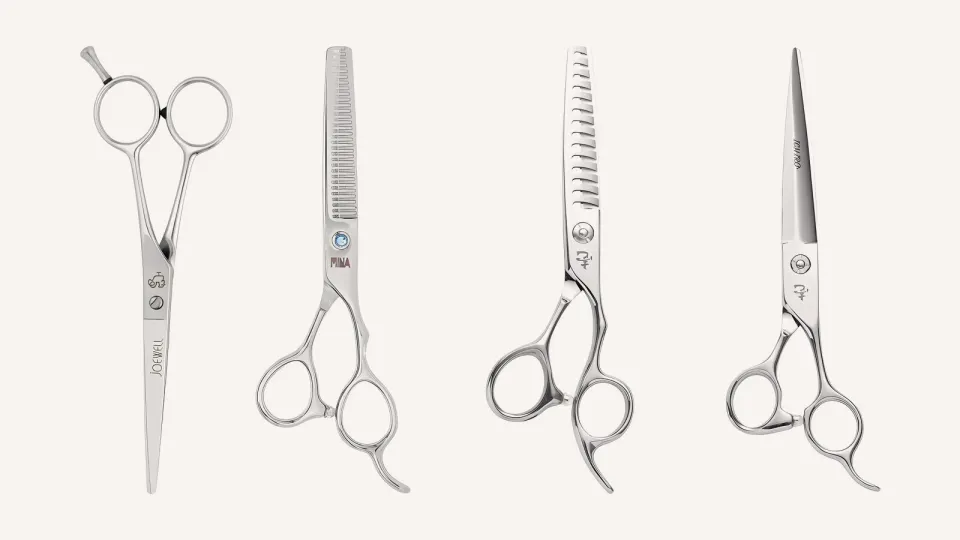
A disconnection is a deliberate break in length: two zones cut to their own guides and not blended into each other. Planned, it reads as design. Left to drift, it reads as a mistake. Decide where the break sits, cut the shortest zone first, and soften only the edge of the break, never the break itself.
How we chose: Principles follow standard cutting practice and common trade usage. Reviewed 4 November 2026. We sell scissors and haven’t run cutting tests.
What is a disconnected haircut?
A disconnected haircut has a deliberate break between two lengths. Instead of each section flowing into the next, you cut the zones to their own guides and leave the join either visible or hidden under a longer layer. The one-line test is that a blend is a slope and a disconnection is a step.
Layering and graduation are connected structures, because each section links to its neighbour and the length changes gradually. Disconnection is the opposite choice. You leave a gap in that sequence on purpose.
| Cut | Where the break sits | Decide |
|---|---|---|
| Disconnected bob | Between shorter hair underneath and a longer top layer | How much shows when the hair moves |
| Wolf cut | A pinched waist between short, rounded top layers and longer lengths below | Where the waist falls |
| Modern mullet | Between the shorter front and sides and the longer back | How big the step is |
| Undercut or two-block | Between a short lower block and a longer top | How high the break sits |
| Butterfly cut | Depends on the version | Agree it from a photo |
How do you plan the break?
Plan it before the first cut, ideally with the client’s reference photo. Names are loose, so settle the perimeter, fringe and face frame in the consultation. Our plan-and-check guide has the questions.
- Where it sits. Place it the same distance from the same landmarks on both sides, and keep it level around the head. A break set higher or lower reads differently, so check it against the head shape.
- How big the step is. A small step reads as softness. A large one reads as contrast.
- Shown or hidden. An exposed break is a graphic line. A hidden one tucks shorter hair under a longer layer, which removes weight you can’t see without changing the visible length.
An accidental break looks like a mistake, and a planned one looks like design. The difference is the decision you made before you picked up the scissors.
How do you cut it, step by step?
This is a general order of work. Your training and educator come first.
-
Section along the break
Take a clean parting where the step will sit and clip the longer zone out of the way.
-
Cut the shortest zone first
It becomes your fixed reference. If the lower zone stays long and the top is the short one, set the top first. The rule is to start with whatever is shortest.
-
Cut the longer zone to its own guide
Don’t blend across the break. Keep your elevation and tension steady, and let each section fall before you lift it. A sideways pull moves where the length lands.
-
Tidy the edge of the break
Remove stray long hairs along the parting line without bevelling the step away.
-
Check from every side
Look from the front, side and back, in the state the client will wear. Re-part across your lines to catch a drift.
Hard break or soft break?
A hard break wants a clean, crisp line. A softer break is worked along the boundary with slide, point and stroke passes. That is advanced work, so practise it on a training head before a client. Slide cutting can remove length fast if the section, entry or path is wrong. See our slide cutting guide and point cutting guide for the moves.
If a slide drags, don’t loosen the tension as a trick. Follow your maker’s tension method and check the edge instead.
What is a butterfly cut?
“Butterfly cut” is a trend name, not a standard structure, and we haven’t found one agreed definition. Described broadly, it is long hair with shorter, face-framing layers over longer lengths, so the shape opens out like wings. Versions differ in how much the front layers connect to the rest.
Treat it like any trend name and settle the detail from a photo. Ask where the shortest layer ends, where the longer lengths start, and whether the join is a slope or a step. If it’s a step, plan it as above. If it’s a slope, it is a layered cut, and our layering guide covers the sectioning.
Which scissors do the work?
An ordinary cutter builds the zones. Texture comes later. Check four things first:
- Tips that meet cleanly, so point cutting stays tidy.
- Tension that holds mid-slide. Loose blades push hair.
- A clean pivot. Product gums the action.
- A smooth edge for slide passes. If the blades fold hair after cleaning and a tension check, a qualified professional sharpener should look at the edge.
A longer blade covers a wide panel in fewer closes. A shorter one reaches tight spots near the face. Neither fixes a shaky plan. Our length guide and scissors for each haircut go further.
Common mistakes
- Blending out of habit. Connect the top layers to the base and you have an ordinary layered cut.
- Letting the break drift. Check it’s level and matches on both sides.
- Cutting the long zone first and trimming to fit. Start with the shortest zone.
- Deciding the break halfway. Settle it in the consultation.
- Over-softening the edge. Blend the edge too far and the step disappears.
- Texturising too early. Set the zones, then texturise lightly.
Common questions
Is a disconnected cut the same as an undercut?
An undercut is one way to build one, with shorter hair underneath and a longer top. Disconnection is the wider idea: any deliberate break between zones.
Can I cut a disconnection with scissors only?
Yes. Clippers are a common choice for a very short lower block, but scissors and scissor-over-comb can build both zones.
How do I fix an accidental disconnection?
Decide whether it works as a design. If not, blend it by cutting the longer zone back toward the shorter one in small steps. That costs length, so tell the client first.
Is the butterfly cut a disconnected cut?
It can be, depending on the version. Agree from a photo where the shortest layer ends and whether the front layers connect to the length behind.
Do I need a thinner or texturiser?
Not necessarily. A plain cutter can build the shape. Add texture last, start light and check after each pass.
Next step
Practise the break on a training head before a client, one zone at a time. Then see how layering and cutter lengths fit your plan. To see how lift and direction decide where the break lands, read elevation and over-direction; for a connected contrast, see graduation and bob cutting.
Further reading
For definitions of cutting terms, Scissorpedia is a reference site about hair scissors. SalonScissors is part of the ShearAlliance, working with other trusted scissor websites. More topics are in the knowledge base.