Slide Cutting: How It Works and What It Asks of Scissors
By SalonScissors editorial team Updated
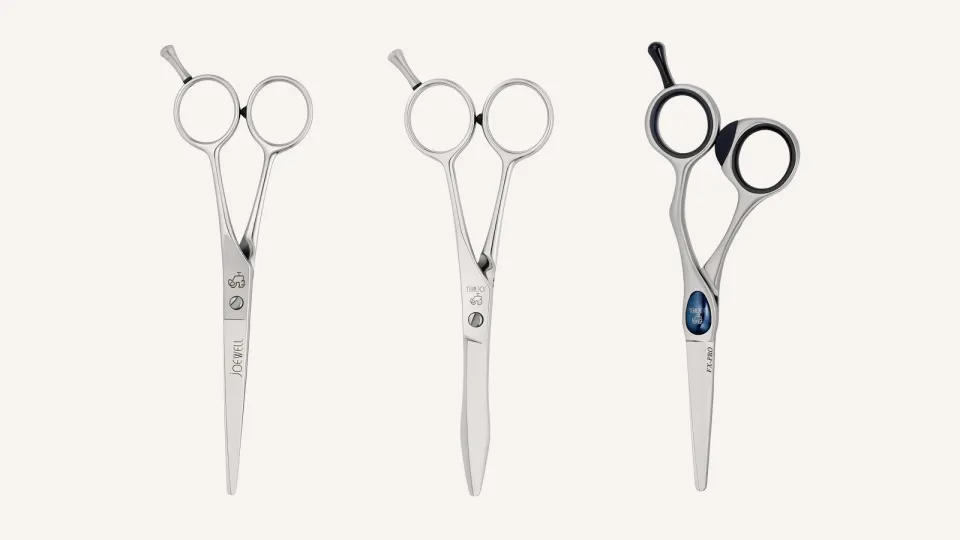
Slide cutting means opening the blades part way and gliding them along a section of hair, so the edge slices through the hair instead of closing across it. It softens lines and takes weight out while the hair keeps its length, and it only works when the scissors move freely through the section.
How we chose: Method follows standard cutting practice and Joewell’s slide-cut guide. Reviewed 4 November 2026. We sell scissors and haven’t run cutting tests.
What is slide cutting?
Slide cutting is a motion technique. Instead of closing the blades across a section and stopping, you let the open edge travel along the hair and cut as it moves. Some teachers call it slicing or stroke cutting, and the exact method varies from school to school.
The visible result is a softer, more tapered end and less bulk in the section. Hair cut this way tends to move more and sit with less of a hard line. The tool matters more here than in almost any other technique, because the edge is in contact with the hair for the whole stroke.
How do you slide cut, step by step?
Keep the section small and your tension light. If the scissors grab or fold the hair, stop and fix that before carrying on.
-
Cut the shape first
Set the length and outline with your usual technique. Slide cutting refines a shape. It doesn’t build one.
-
Take a light section
Comb a small section smooth and hold it with gentle tension. A big, tight section is where slide cuts go wrong.
-
Lay the open blades along the hair
Open the blades part way and rest them nearly parallel to the section, with the tips pointing toward the ends. The flatter the angle, the gentler the cut.
-
Glide from mid-length toward the ends
Move the blades down the section in one continuous stroke, closing slightly as you travel. Keep the pace even. A hesitation leaves a mark.
-
Comb out and look
Comb through and look at the section in its natural fall. If you want more softness, repeat with another light stroke instead of pressing harder.
What do the scissors have to do?
The edge has to glide without gripping. That is why edge and blade shape matter more for slide cutting than for a blunt line. Three things count:
- A smooth edge. A micro-serrated edge grips the hair on purpose, which helps a blunt line but works against a slide.
- A blade outline made for it. Some makers offer curved, bamboo-leaf blades for sliding. Joewell’s slide-cut guide points to its bamboo-leaf series for this technique.
- Good tension and a clean pivot. Blades that are too loose or too stiff catch hair instead of gliding.
Convex grind
The outer face curves down to a very fine edge. The inner face is hollowed, so the blades only touch where they cross.
Bevelled grind
The outer face is ground flat down to the edge. Joewell calls its flat single bevel easy to use.
Each grind is drawn as one blade cut across, enlarged. Makers explain their own: Kasho’s edge and Joewell’s blade guide.
A convex edge is the usual starting point, but it doesn’t guarantee a good slide. Check what the maker says the model is for. Our edge guide explains each edge name, and the convex edge guide covers sharpening and which models suit sliding.
When should you slide cut, and when not?
| Slide cutting suits | Think twice |
|---|---|
| Softening a heavy, blunt end | Very fine hair that is already sparse at the ends |
| Removing bulk through the lengths on medium to thick hair | A section too thick to hold lightly |
| Blending layers so they don’t show as steps | Anywhere your scissors catch or pull |
| Adding movement to long hair | Close to the skin, where tip control matters most |
How does slide cutting change with hair type?
Hair type changes how much you take and where you start. The method stays the same.
- Fine hair: use a flat angle and one light stroke, then check. Fine ends can look see-through quickly.
- Medium hair: two light strokes through the lengths usually soften a heavy line without losing the shape.
- Thick or dense hair: work in more, smaller sections instead of one big one. Each section should still be light enough to hold with gentle tension.
- Wavy and curly hair: judge each pass on dry hair, because curl pulls the length up and the ends settle differently when it dries. Our curly and coily hair guide covers the principles.
How can you practise it safely?
Practise on a mannequin or a spare section before you try it on a client. Change one thing per pass, such as the angle, the starting point or the speed, and look at what that one change did. Keep your fingers clear of the blades and keep the tips pointing away from the scalp and skin.
Stop and check your scissors the moment a slide catches. Clean the blades, check the pivot is moving freely, and look at the tension. If the catch is still there on a clean, adjusted pair, it is an edge problem, and the pair needs a service before it goes back to work.
Common mistakes
- Cutting with the whole section in a fist. Thick, tight sections drag. Split them and take less.
- Starting too near the root. Begin at mid-length or lower. Cutting too high takes more out than you meant.
- Pushing through a catch. A catch means the edge or tension needs attention. Our guide to scissors that fold or drag hair lists the checks.
- Too many passes. Each stroke takes a little out. Check between passes.
- Using a grippy edge. If the pair you own has a micro-serrated edge, save it for blunt lines and over-comb work.
Common questions
Can I slide cut with any hair scissors?
Not equally well. A smooth, sharp edge on a well-adjusted pair can slide, but a micro-serrated edge grips the hair and a loose or gritty pivot catches it. Look at what the maker says the model is for.
Is slide cutting better on wet or dry hair?
Both are used. Wet hair is easy to control, and dry hair shows the true result. Which you pick depends on the hair and your habits. Our wet and dry cutting guide compares them.
Will slide cutting damage my scissors?
Used properly, no. Hard pushing through thick or product-laden hair is what wears an edge and loosens a pivot. Keep sections light and the blades clean.
How is slide cutting different from point cutting?
Point cutting snips notches into the ends with the tips. Slide cutting glides the open blade along the section. They soften hair in different ways. See our point cutting guide.
Next step
If a slide feels rough on your current pair, check the edge and tension before buying anything. If you want a pair made for it, start with our guide to which scissors suit each technique, or browse cutting shears.
Further reading
For plain-English definitions of blade and edge terms, Scissorpedia is a reference site about hair scissors. Scissorpedia is a fellow member of the ShearAlliance (see ShearAlliance). More topics are in the knowledge base.