Wet or Dry Cutting: What Changes for You and Your Scissors
By SalonScissors editorial team Updated
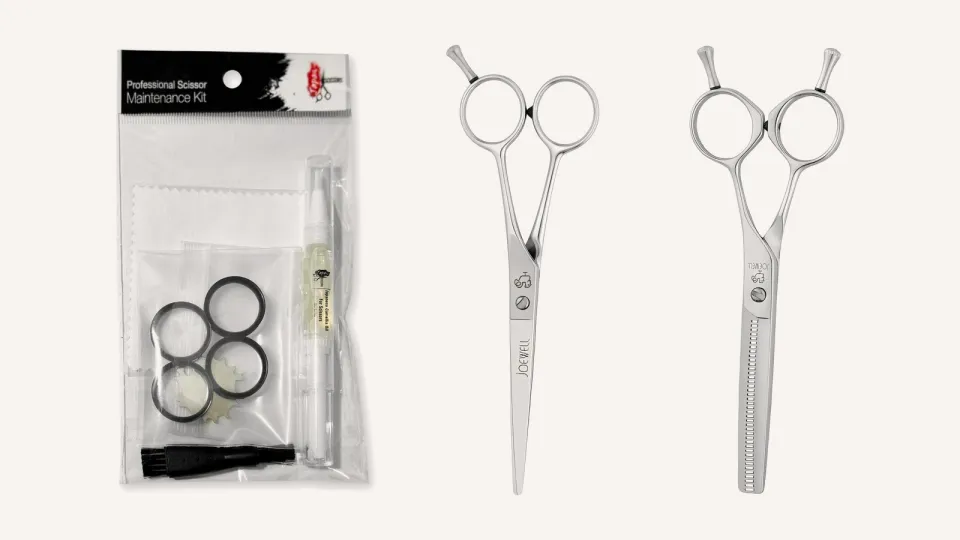
Cut wet when you want clean sections and a precise line, and cut dry when you want to see how the hair really falls. Most stylists use both on the same client: they build the shape wet and refine it dry. The choice changes how hair stretches, how much friction your scissors meet, and how you care for them afterwards.
How we chose: Notes follow standard cutting practice and common maker care advice. Reviewed 4 November 2026. We sell scissors and haven’t run cutting tests.
What changes when you cut hair wet?
Wet hair is heavy, smooth and stretchy. That helps you in three ways: it sections cleanly, it holds a comb line, and the ends stay in place under tension while you cut. Blunt lines and perimeters are often cut wet for those reasons.
The catch is length. Hair is longer when wet and shorter when dry, and the difference depends on the hair. Straight hair changes little. Wavy and curly hair can shrink a lot as the curl returns, so a length that looks right wet can sit well above where you intended once it dries.
What changes when you cut hair dry?
Dry hair shows you the real shape: where the curl sits, how the ends fall and where the weight collects. It is the natural choice for texturising, fringes, and checking the finish.
Dry hair also gives your scissors more friction than wet hair does. That is useful information. If your pair catches, folds or pulls on dry hair, you will feel it sooner. Our guide to dull-feeling scissors lists what to check.
-
See it as they wear itIn their usual parting, with the curl doing what it does at home.
-
Wet or dry, keep it evenWet hair hangs longer. Pick wet or dry for the cut and keep the whole head the same.
-
Check it the same wayJudge the finish dry, in the parting and style they’ll walk out with.
Wet, dry or both?
| Job | Often cut | Why |
|---|---|---|
| Blunt bob or one-length line | Wet, then check dry | Clean sections, firm line, then adjust for the way it falls |
| Layers | Wet or dry | Wet is easy to section. Dry shows the movement. |
| Fringe | Often dry, or damp | The fall of a fringe depends on the parting and growth |
| Curly and coily hair | Dry, or curl by curl | Shrinkage is hard to judge wet |
| Texturising | Dry | The effect is visible as you work |
This table is a starting point. Your training, your client and the hair itself decide.
How does it change which scissors you use?
The scissor choice matters more for what you do with the hair than whether it’s wet or dry. A few points still apply.
- Edge. On slippery wet hair, some stylists prefer an edge that grips for blunt lines, such as a micro-serrated or bevelled edge. For sliding on dry hair, a smooth convex edge is the usual choice. Our edge guide explains each.
- Tension and pivot. A clean, correctly adjusted pivot matters in both. Catching on dry hair often traces back to tension or residue.
- Length. Wet work on long lines can use a longer blade, and dry detail often uses a shorter one. See the scissor length guide.
How do you look after scissors used on wet hair?
Water, hair product and cleaning liquids all end up on the blades, and moisture left near the pivot is what you want to avoid. Dry the blades and the pivot area after wet work and between clients, and store the pair closed and dry. Follow your maker’s care page for oil. Our cleaning guide gives the full routine, and the salon day care routine shows where it fits in a working day.
Maintenance Kit: Clean, Oil & Fix Hair Scissors
Best for keeping a cloth, brush and oil at your station
Common mistakes
- Cutting curls wet and not allowing for shrinkage. Check dry, or cut conservatively and refine.
- Different hair states in one head. If you cut one side wet and another damp, the result won’t match. Keep the whole head in the same state.
- Putting wet scissors away. Dry them first.
- Judging the finish wet. Check the cut dry, in the client’s usual parting.
- Forcing scissors through dry, coated hair. Product build-up on the hair or blades makes catching more likely. Clean the blades and keep sections light.
How do you decide for a particular client?
Ask three quick questions before you start.
- How does the hair behave dry? Strong curl, a cowlick or a heavy parting often argue for checking dry.
- What’s the job? A solid outline suits wet, and softening and detail suit dry.
- What do you need to see? If you must judge shrinkage, weight or movement, you need to see the hair dry.
Most clients end up with a mix: build wet, check and refine dry. Pick one for each part of the cut, and keep the whole head in the same state as you work.
Common questions
Is dry cutting better than wet cutting?
Neither is better overall. Wet gives you control and clean lines, and dry shows how hair really falls. Many stylists use both on the same cut.
Does cutting dry hair wear scissors faster?
Dry hair has more friction, so a tired edge or loose pivot shows up sooner. Keep the blades clean, check the tension, and book a service when a clean, adjusted pair still catches. See what to ask a sharpener.
Should I use different scissors for wet and dry?
You don’t need to. One good cutter covers both. Some stylists prefer a gripping edge for wet blunt work and a smooth convex edge for dry sliding.
How much longer should I leave curly hair when cutting wet?
It depends on the curl and the client, so there’s no fixed number. Check a curl dry first, then judge how far it springs up. Our curly and coily hair guide covers the principles.
Next step
Pick one cut you do often and compare it wet and dry on a mannequin, noting what moves. Then see how sectioning and tension affect each.
Further reading
For definitions of cutting terms, Scissorpedia is a reference site about hair scissors. Scissorpedia is a fellow member of the ShearAlliance (see ShearAlliance). More topics are in the knowledge base.