Blunt Cutting (Club Cutting) With Scissors: Method and Tips
By SalonScissors editorial team Updated
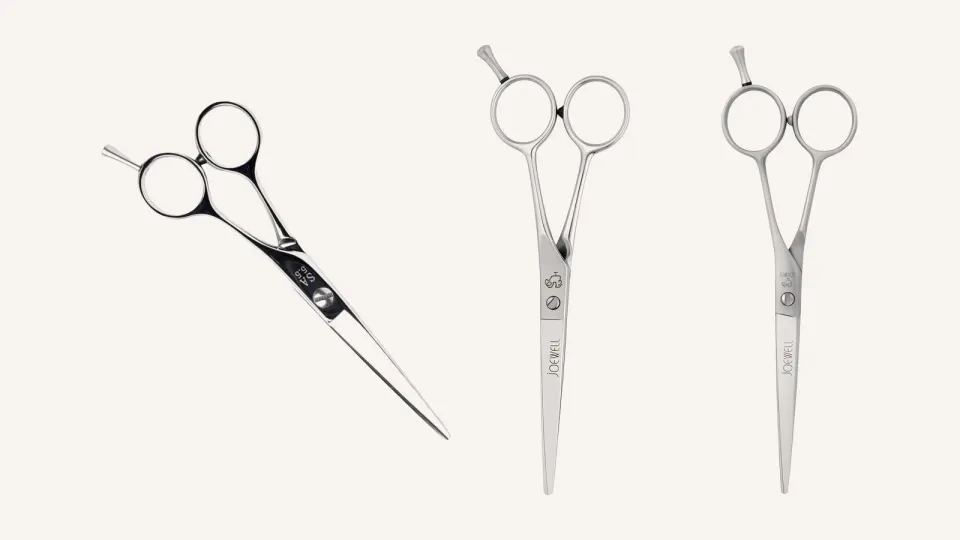
Blunt cutting, also called club cutting, means closing the scissors straight across a section so every strand ends at the same length. It gives a solid, defined line, and it’s the base of bobs, one-length cuts and most perimeters. The line is only as clean as your sections, your tension and your close.
How we chose: Method follows standard cutting practice and Joewell’s blunt-cut guide. Reviewed 4 November 2026. We sell scissors and haven’t run cutting tests.
What is blunt cutting?
In blunt cutting, the blades close across the whole section in one line, so the ends come out flat and full. There’s no texturising and no taper. The edge looks solid because every strand finishes at the same point.
That solidity is why stylists use it for bobs, one-length lines, fringes with a firm edge and the base of a layered shape. It also holds weight at the ends, which can be what the cut wants. Joewell calls blunt cutting the basic technique and says many of its scissors suit it.
How do you cut a clean blunt line?
Aim to make every close the same: the same tension, the same angle, the same stroke. The line comes from repeating that action.
-
Prepare the hair
Comb the hair smooth and even, with no tangles. Blunt cutting shows every bump, so start from a clean, combed base.
-
Take a controlled section
Take a section you can hold flat between your fingers. Smaller sections give you more control, and wide thick ones tend to move.
-
Hold it with even tension
Hold the section with the same pull from root to end. Uneven tension is the most common cause of a wavy line, because the hair springs back differently along it.
-
Set the cutting line
Place your fingers parallel to the line you want to cut. Cut along that line, not across your fingers at a guess.
-
Close smoothly along the blade
Open the blades wide enough to take the section, then close in one smooth stroke along the blade. Don’t snip with the tips, and don’t push the hair into the scissors.
-
Check against the previous cut
Carry a little of the last cut into each new section as your guide. When you’ve finished, cross-check by lifting the hair the other way.
How do tension and sections change the line?
Tension is how hard you pull the hair while you cut it. Hair stretches under tension and springs back when you let go, so a section cut tight can sit shorter than one cut loose. Holding the same tension from section to section keeps the line level.
Section size works the same way. A thin section lets you see and feel the whole line. A thick one gives a less reliable cut, because hair on the inside of the section isn’t held as firmly as hair on the outside. If a line looks uneven after a cut, look first at tension and section size. Our guide to sectioning and tension goes deeper into both.
Does blunt cutting change on wet and dry hair?
It can. Wet hair is heavier and stretches, so it hangs longer than it will when dry. Curly and wavy hair shrinks the most. Many stylists leave a little extra length on wet hair, then refine the line dry. Our wet and dry cutting guide covers the trade-offs.
What goes wrong with blunt cuts?
- A wavy or stepped line. Tension changed between sections. Match the pull, and use the previous cut as a guide.
- Hair that folds or pushes. The scissors may need cleaning, a tension check or a service. Read our guide to dragging scissors.
- Notches and bites. You snipped with the tips or closed in stages. Close smoothly along the blade.
- A hard line that doesn’t suit the client. Soften it afterwards with point cutting or a gentle slide.
- Cutting at an angle you didn’t intend. Check that your fingers and your wrist are in line with the planned cut.
Which scissors suit blunt cutting?
A 5.5” or 6.0” cutter with a smooth close is the usual choice, with a convex or flat edge. A bit more blade length helps on long, wide sections, and a shorter pair helps near the face. A micro-serrated edge grips hair, which some stylists like for blunt lines. See our edge guide for what each edge does.
If hair slips or folds even with clean, adjusted scissors, the edge has probably lost its bite and needs a service. Which scissors for which haircut lists the lengths for bobs and other cuts.
Common questions
Is blunt cutting the same as club cutting?
Yes. Both words describe cutting straight across a section so all the hair ends at the same length. Some teachers use “club cutting” for solid one-length work.
Do I need special scissors for a blunt cut?
No. A smooth-closing cutter in a length that suits the section is enough. Check that the edge is sharp and the tension is right.
Why does my blunt line look uneven when it dries?
Usually tension and stretch. Hair cut under different tension springs back differently, and wet hair sits longer than dry. Check the line dry and refine it.
Can I blunt cut with thinning scissors?
No. A thinner has teeth and takes hair out. A blunt line needs a cutter that closes across the whole section.
Next step
Practise holding the same tension on a mannequin, one section at a time, and see how the line changes when you alter it. The apprentice cutting checklist gives you a page to log it. Choosing a pair? Browse cutting shears or compare lengths in the scissor length guide.
Further reading
For plain definitions of cutting terms, Scissorpedia is a reference site about hair scissors. Scissorpedia is a fellow member of the ShearAlliance (see ShearAlliance). More topics are in the knowledge base.