Cutting Children's Hair: Scissors, Pace and Posture
By SalonScissors editorial team Updated
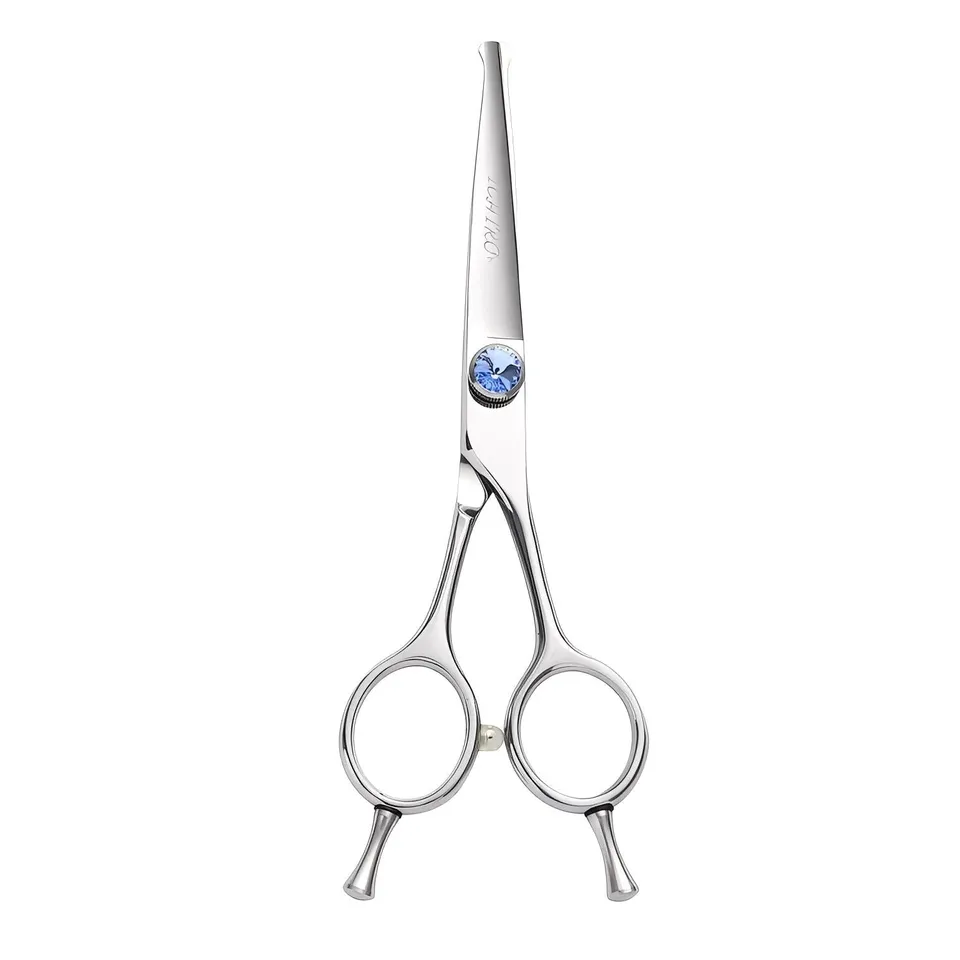
A child’s haircut is mostly a job of pace and position. The craft is the one you already use. What changes is a smaller client who moves, a short patience span and a parent watching. Settle the chair, work in short stages, stop whenever the head moves, and keep the tips well clear of ears and eyes.
How we chose: General cutting practice, plus the details on our two kids product pages. Reviewed 4 November 2026. We sell scissors and haven’t run cutting tests.
What is different about cutting a child’s hair?
The cutting is the same: sections, tension, a guide, a check. The differences sit with the person in the chair. Children wriggle, tire of sitting still and watch your hands. Their heads are smaller, so ears, nape and hairline sit closer to the blades. A parent is usually watching, too, so the plan you agree matters more.
That changes your order of work. Expect more setup, shorter stages and a lighter touch near the skin. Keep to simple moves such as blunt lines and light point cutting, and leave fast or advanced motions for clients who sit still. This is general guidance. Your training comes first. Our guide to how to hold and open scissors is a good refresher on control.
How do you set up the chair?
Do the setup before the first snip. It’s quicker than fixing a rushed start.
-
Seat them securely
Use a booster or board if the chair is too big for them, and check they’re stable. Set the height so your elbows stay relaxed instead of reaching.
-
Fit the cape
Cover the shoulders and neck so cut hair stays off their skin. Check it isn’t tight.
-
Show them what’s coming
Let them see the comb and spray bottle, and say in one sentence what you’ll do. Keep the scissors in your own hand, closed, until you start. Never hand them over.
-
Agree the plan
Settle the length, the fringe and what happens around the ears with the child and the parent, ideally with a photo. Our plan-and-check guide has consultation questions that work at any age.
-
Pick damp or dry
Use a light mist or a damp comb if the child dislikes spray. Choose wet, damp or dry for the hair and the style, as our wet or dry guide describes.
How do you pace the cut?
Think of a child’s patience as a budget, and spend it on the parts the client will notice most. Decide before you start which parts need stillness, such as the fringe and the lines around the ears, and cut them while the child is settled. Don’t leave them for the end.
- Work in small sections. Short stages give you natural pause points.
- Say what’s next. “Now I’m doing the back” is enough to keep a child with you.
- Start longer. You can’t put length back, and a rushed short cut is the common regret.
- Know your stopping point. If the child can’t sit any longer, finish the outline and leave detail for a tidy-up visit if the parent agrees.
- Check it dry and settled before you call it done.
What do you do when the head moves?
Stop cutting. Never chase a moving head with open blades.
- Open your hand away from the head and lower the scissors, closed, to your side or the station.
- Wait until the head is still, and steady it gently with your free hand if the child is comfortable with that.
- Ask them to look at a spot, such as a poster or a mirror, then restart with a small section.
If a blade touches skin, stop and follow your salon’s usual procedure before you carry on. A pair that folds hair makes you press and tug, so check tension and the edge first. Our post on scissors that fold or drag hair lists the checks.
How do you work near the ears and the fringe?
Near the ears, fold the ear forward with your free hand or fingers, and let the comb sit between blades and skin. Keep the tips pointing away from the skin and where you can see them. Use short, controlled closes.
For the fringe, take a small section, cut longer than you think you need, and check after each step. Ask the child to close their eyes, and keep control of the section with your fingers. Stop if they flinch. Our fringes and short layers guide covers growth patterns and starting long.
Which scissors suit a child’s haircut?
“Kids haircut scissors” are professional scissors for an adult cutting a child’s hair. They are not craft scissors for a child to use. This table shows what the features do.
| Feature | What it does | What to check |
|---|---|---|
| Rounded tip | Less pointed near ears and a moving hairline. The blades still cut | A clean close and your own control |
| Short blade, 5.0” or 5.5” | Reaches tight spots easily, with more closes along a long line | Our length guide |
| Convex edge | Listed on the Ichiro Kids Gem | What the maker says the model is for |
| Removable finger rest | Listed on the Ichiro Kids Ergo, so you can adjust your grip | How it sits in your hand |
| Hand | Both Ichiro Kids pairs are right-handed | Left-handed stylists can browse the left-handed range |
Our product pages suggest 5.0” for close detail, 5.5” for an everyday feel and 6.0” for extra reach. A rounded tip helps with tool choice, but careful sectioning and positioning still do most of the safety work.
You don’t need a dedicated pair. A well-adjusted everyday cutter works with the same care, and some stylists simply reach for a 5.0” or 5.5” they already trust. See 5.0” scissors if you want a short pair.
Common mistakes
- Starting before the plan is agreed. It leads to a mid-cut change of mind.
- Cutting a moving head with open blades. Stop and wait every time.
- Saving the fringe and ears for last. The child is tired by then.
- Going short to finish faster. A lighter first pass is easier to fix.
- Treating a rounded tip as blunt. It is less pointed. It is not safe to be careless with.
- Leaving scissors within reach. Put them away closed when you step back.
Common questions
Do I need special scissors to cut children’s hair?
No. A well-adjusted cutter you can control does the job. A rounded-tip pair is an option for close work near ears.
Are rounded-tip scissors safe for kids’ cuts?
A rounded tip is less pointed, but the blades are still sharp. Control of the head, the section and the tool matters more than the tip.
What if the child won’t sit still?
Pause, lower the scissors, reposition and restart with a small section. If it keeps happening, finish what’s safe and agree a tidy-up with the parent.
Should I cut a child’s hair wet or dry?
Either can work. Choose for the hair and the style, and check dry before you finish. Our wet or dry guide compares them.
Can a child hold the scissors?
No. Kids haircut scissors are sharp professional tools for the stylist. Keep them in your hand or put away closed.
Next step
If a short, rounded-tip pair would help at your station, start with the Gem, then compare with the Ergo above. If you’d rather practise first, work through our sectioning and tension guide. If you are choosing a method for fine or curly hair, see hair typing 1A to 4C for stylists and first cut: wet, damp or dry.
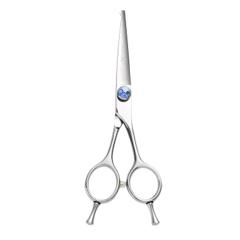
Ichiro Kids Gem Hair Cutting Scissors
Best for a short, rounded-tip cutter for children’s cuts
Further reading
For plain-English definitions of cutting terms, Scissorpedia is a reference site about hair scissors. SalonScissors is part of the ShearAlliance, working with other trusted scissor websites. More topics are in the knowledge base.