Convex grind
The outer face curves down to a very fine edge. The inner face is hollowed, so the blades only touch where they cross.
Ten pairs of hair scissor terms people confuse: size and blade length, convex and bevel, offset and crane, tooth count and cut ratio, and more.
By SalonScissors editorial team Updated
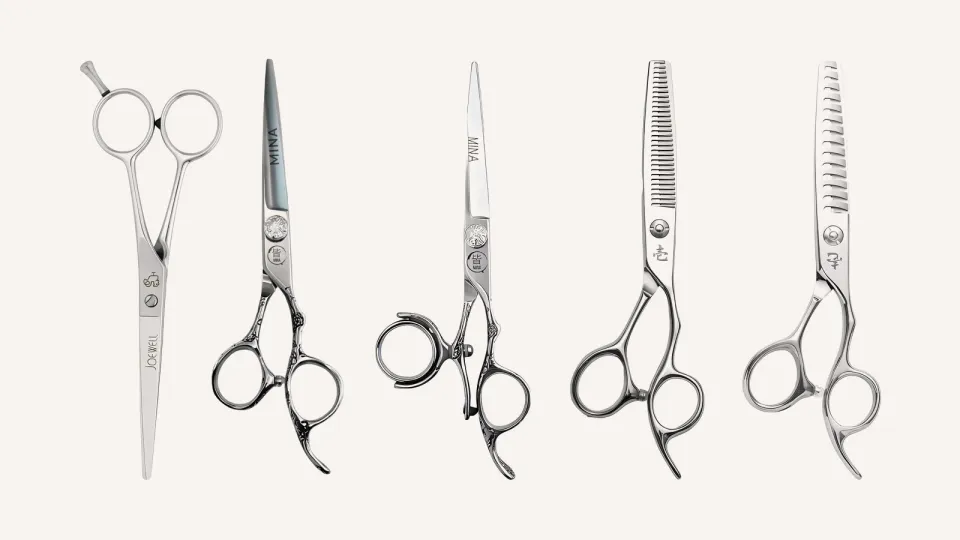
Most scissor confusion comes from two words that sound alike but describe different things. These ten pairs are the ones that cost people the most time on a listing, a course kit list or a salon floor.
How we chose: Ten confusions picked from the questions that come up most on listings and kit lists, explained from maker pages. We haven’t run cutting tests. Reviewed 4 November 2026.
The inch size is the whole scissor. Makers differ on whether a finger rest counts.
The blade is the part that cuts. Two pairs with the same inch size can have different blades.
Size is the maker’s inch label for the whole scissor, from the end of the rings to the tip. Blade length is the working part, from the pivot to the tip. A 5.5” pair has a shorter blade than that, and makers measure differently, so compare like with like. Yasaka’s SA-5.5 page, for example, lists a 60 mm blade for the 5.5”. Our size guide shows how to measure both.
Why it matters: two 5.5” pairs from different makers can have different blade lengths, so the size alone won’t tell you which one reaches further.
Three words get used as if they were one. The grind is how the edge is ground, such as convex or bevelled. The shape is the outline of the blade, such as straight, curved or sword. The finish is the surface, such as smooth or micro-serrated. A listing can combine any of them, so don’t compare “convex” with “sword”. See the convex edge guide for more.
Why it matters: a convex edge doesn’t guarantee slide cutting. The use the maker describes for the model is the better guide.
The outer face curves down to a very fine edge. The inner face is hollowed, so the blades only touch where they cross.
The outer face is ground flat down to the edge. Joewell calls its flat single bevel easy to use.
Tiny teeth along the edge grip the hair so it doesn’t slip as the blades close. They’re far smaller than a thinner’s teeth.
A raised ridge runs along the blade. Joewell says a sword shape delivers the power to the point of the blade.
Each grind is drawn as one blade cut across, enlarged. Makers explain their own: Kasho’s edge and Joewell’s blade guide.
These describe the handle. Offset makes the thumb branch shorter, so the thumb ring sits closer to the pivot. Crane bends the handle further. Swivel means a ring that rotates. None of them changes the blade, and none is a treatment for sore hands. Our swivel hair scissors page lists the rotating pairs.
Why it matters: the handle changes where your thumb sits, and a new layout feels different for a while. The blade still cuts the way it was ground.
Both rings sit level, the classic layout. Thumb and finger rings are the same distance from the pivot.
The thumb branch is shorter, so the thumb ring sits closer to the pivot. Most cutters we sell are offset.
A sharper offset. The thumb branch bends, which changes the angle your hand holds the blades at.
A true left-handed pair has its blades reversed for the left hand, as well as the handle. A pair that’s left-hand-friendly or has symmetric rings can be held in either hand but still has right-handed blades. A mirrored product photo doesn’t tell you which you’re buying, so check the hand in the selector. Our left-handed guide explains why it matters.
Why it matters: the blade orientation changes what you can see along the blade as you cut, and a right-handed pair held in the left hand can’t be turned into a true left-handed one.
Tooth count is how many teeth a thinner has. Cut ratio is the maker’s estimate of how much of a section one close removes. Joewell’s E-40 and SNT-40 both have 40 teeth, but Joewell lists them at 35% and about 5% or less. Where there’s no ratio, ask rather than guess. Our cut ratio guide has the figures.
Why it matters: start lighter than you think. A second pass is easy, and a heavy first pass can’t be undone.
Brands overlap these labels, so read the teeth and the ratio, not just the name. As a rule of thumb, a thinner or blender has many fine teeth to soften weight, a texturiser has fewer, wider teeth for visible texture and a chunker takes out bold, broken pieces.
Cutter
Two plain blades. Makes the shape.
Thinner
Many fine teeth. Softens weight and lines.
Texturiser
Fewer, wider teeth. Takes out visible pieces.
Long cutter
6.5” to 7.0”. Covers more comb for barbering.
Why it matters: choose by the job. Blend once the outline is cut, and texturise once the shape is set.
Tension is how much resistance the pivot gives as the blades close. Sharpness is the condition of the edge. Loose tension can fold hair on a sharp pair, and over-tightening can’t rescue a worn edge. Check tension the way your maker says to, as set out in our dragging scissors guide.
Why it matters: loosening to feel smoother and tightening until the folding stops are both fixes for the wrong problem.
Sharpening restores the edge. Servicing is wider: it can include an edge, a nick, the alignment, the pivot and the bumper. A pair that clicks after a drop probably needs servicing, not just a sharpen. Tell the technician what changed and when. Our sharpening service page explains what to send.
Why it matters: a note of what went away and what came back makes the next service easier. The maintenance log shows what to write down.
A blunt cut is a technique: closing straight across a section to set a clean line. Blunt scissors are dull ones. The two have nothing to do with each other, and a dull pair makes a poor blunt cut. Our cutting technique guide covers the moves.
Why it matters: write “blunt cut” or “dull scissors” and nobody on the team has to guess which one you mean.
A steel grade, such as 440C or VG-10, names the material. A brand names the company, and origin says where a model is made. They don’t follow each other. For example, Kamisori is a Canadian brand with Japanese-inspired designs, and some models are made in Japan. Check the product page for each fact. The steel library explains the grades.
Why it matters: a grade or a national identity isn’t a score for the scissors. Fit, geometry and care decide how a pair feels in a working day.
| Pair | The short version |
|---|---|
| Size and blade length | Whole scissor versus pivot to tip |
| Grind, shape, finish | Edge, outline, surface |
| Offset, crane, swivel | Handle layouts |
| True left-handed and friendly | Reversed blades versus symmetric rings |
| Tooth count and cut ratio | How many teeth versus how much comes out |
| Tension and sharpness | Pivot resistance versus edge condition |
| Steel, brand, origin | Material, company, factory |
Want the full reference? Our scissor glossary lists every term on a listing, and Scissorpedia is a reference website on scissors. Scissorpedia and SalonScissors are fellow members of the ShearAlliance.
More guides are in our knowledge base.
Tell us what you cut and which scissors you are comparing.
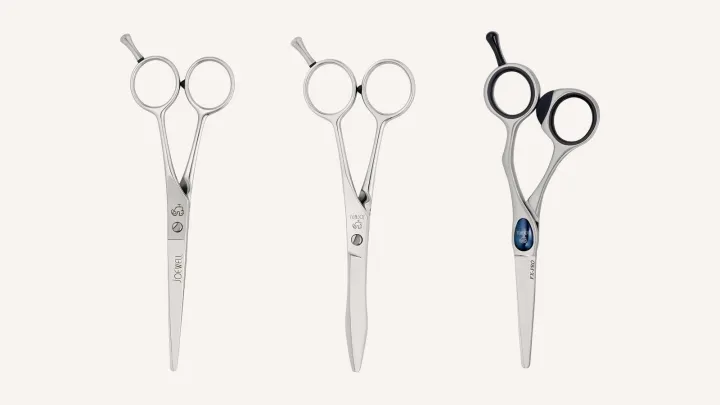
Ten hair scissor myths busted: blade length, tooth count, Japanese steel, hardness, convex edges, left-handed pairs, handles, oil, folding hair, coatings.
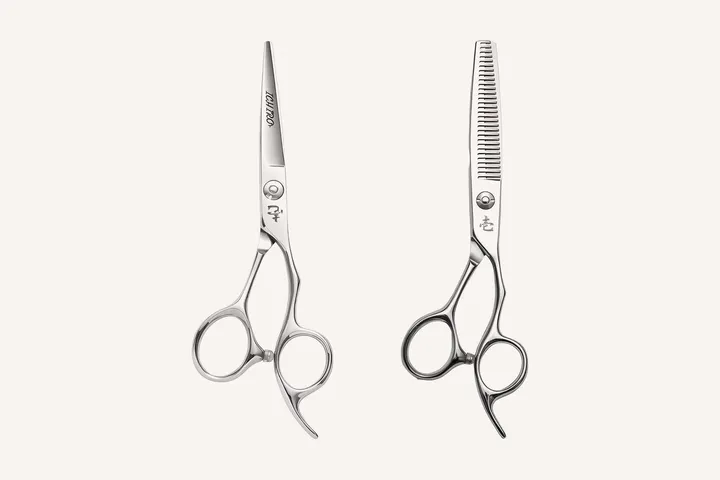
Ten questions apprentices ask once the scissors are in hand: tension, oil, tired hands, left-handed use, folding hair, sharpening, borrowing and drops.