Top 10 Questions Apprentices Ask About Their Scissors
Ten questions apprentices ask once the scissors are in hand: tension, oil, tired hands, left-handed use, folding hair, sharpening, borrowing and drops.
By SalonScissors editorial team Updated
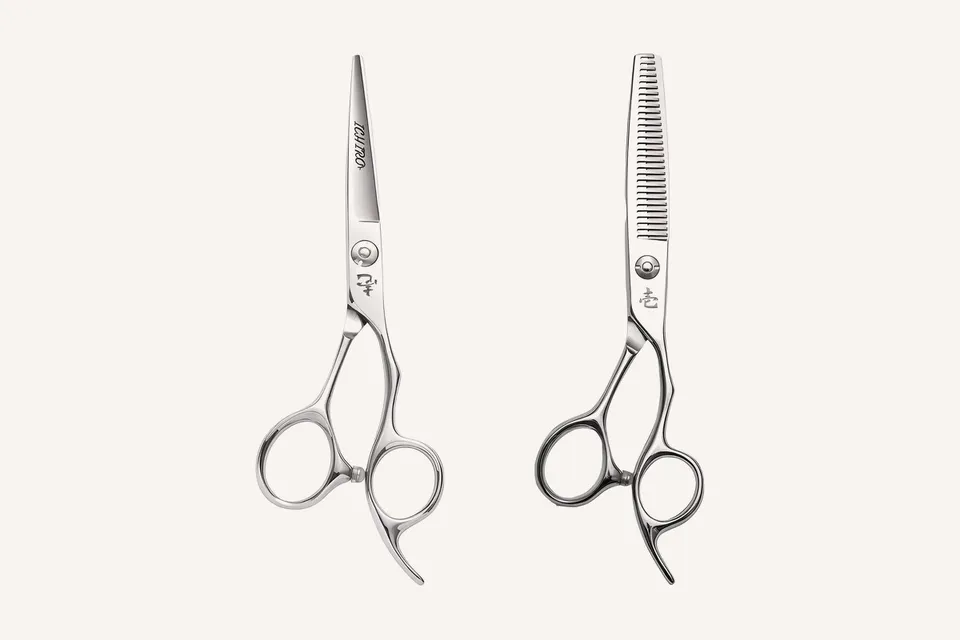
These are the questions that come up after the kit is bought and the first real cuts begin. They’re about using the pair you already have, not choosing one. Your educator’s instructions come first wherever they differ.
How we chose: Ten questions from the floor, answered from maker care pages. We sell scissors and haven’t run cutting tests. Reviewed 4 November 2026.
More on how we chose
Who it’s for
- Salon
- Barber
- Apprentice
- Finger rings
Where your thumb and fingers go. A ring insert makes a loose ring smaller.
- Handles
Join the rings to the pivot. Straight, offset or crane changes your grip.
- Pivot
Where the blades turn. The screw here sets the tension.
- Blades
Everything past the pivot. The edge decides how the scissor cuts.
- Tips
Where point cutting and close detail happen.
- Finger rest
A hook for your little finger. Some screw off, some are fixed.
1. Which scissors do I use for what?
Use the cutter for the outline and the length. Use a thinner only when the plan calls for taking weight out, and only after the outline is cut. Keep a shorter pair, around 5.0” or 5.5”, for fringes, ears and necklines. Our types of scissors guide shows each one.
| Tool | Its job |
|---|---|
| Cutter, 5.5” or 6.0” | Outline, length and layers |
| Short cutter, around 5.0” | Fringes, ears and necklines |
| Thinner | Taking weight out, after the outline |
| Texturiser | Visible texture and broken pieces |
2. How tight should the tension be?
As tight as your maker says, which isn’t a feeling you can borrow from another brand. Kasho’s FAQ gives a simple drop check for its series: hold the scissors tips up, open them into a cross and let one ring go, and it should drop a little. The dragging scissors guide has the full steps, and the Millennium and X-treme Perfection series need no tension adjusting.
3. Do I have to oil them every day?
It depends on the maker. Kasho says to oil the pivot daily for most of its series, while Joewell says to oil after you disinfect. Some pivots need no oil at all. Check the maker care instructions for your brand.
4. Why is my hand tired or sore after a day of cutting?
Fit is the first thing to check. A ring that’s too big makes you grip harder, and a ring insert can fix that. A handle that sits your thumb or elbow in an awkward spot may suit a different layout, such as straight, offset or crane. If the discomfort keeps coming back, talk to a health professional, because a handle isn’t a treatment. Our handle guide draws each layout.
5. Can I use right-handed scissors if I’m left-handed?
You can hold them, but they’re still right-handed. A true left-handed pair has its blades reversed as well as the handle, which changes what you can see along the blade as you cut. Turning a right-handed pair over doesn’t create that. Tell your educator on day one, because kit lists name a hand. Choose a true left-handed pair, expect a short adjustment, and see our left-handed guide.
6. Why does hair fold between the blades?
Often it’s build-up in the pivot, then tension that’s too loose, then an edge that’s worn. Work through them in that order: clean, check tension, look along the edge. Don’t tighten the screw until the folding stops, because that grinds the blades. Our dragging guide lists the causes in a table.
7. When do they need sharpening?
There’s no fixed interval. Book a service when a clean and a tension check haven’t fixed pushing or folding, or after a nick or a drop. Keep a note of when the pair last went away, using the maintenance log, so you can see how long a sharpen lasts for you. Our sharpening service page has the details.
8. Do I need a thinner yet?
Only if your course asks for one or a cut needs it. A cutter does the outline, and you can add a thinner later once you know where weight is the problem. Ask your educator what the kit list requires before you buy, and see our apprentice picks.
9. Can I borrow someone else’s scissors?
It’s best not to. A borrowed pair may be the wrong hand or size, and the rings won’t fit your fingers. If a pair is shared, clean and dry it between users and follow your salon’s rules. NSW Health’s hairdressing hygiene fact sheet covers equipment in NSW, and other states have their own rules.
10. What do I do if I drop them?
Stop cutting with them and check. Yasaka warns that a drop or knock can damage the blade, and Kasho advises against cutting with nicked blades. Look along each edge in good light, and book a service if you see a nick or the blades catch. Our dropped scissor plan has the steps. Until the pair is checked, use a backup if you have one.
A 30-second check before each client
Most of the questions above start as something you could have caught early. Before every client:
- Open and close the pair a few times. It should move smoothly, without grit or a catch.
- Look at both tips for bends or nicks.
- Check no hair is stuck in the pivot.
- Close it on a few loose strands and feel for a catch or a grind.
If something feels off, swap to your backup and sort it out after the client.
Five things worth asking your educator this week
- Which sizes and hands does the kit list allow? Some courses name a spec, and some name a brand.
- Which cleaning product has the salon or school approved for scissors? Follow its label, including how long it stays on.
- Where do scissors live on the station? A closed, dry slot beats a drawer.
- How are scissors sent for service? Ask who books it and how long you’d be without them.
- What does assessment expect? Australia’s SHBHCUT006 unit sets out the consult, cut and review steps your cuts are measured against.
A one-line note after each practice session helps too: the scissor, the size, the section and what you’d change. That’s the habit behind our apprentice checklist.
Next step
Still working out the kit? Read the seven mistakes to avoid when you buy and browse the knowledge base. If your course asks for an offset cutter, this apprentice pair is a place to start:
Ichiro Ergo Apprentice Hair Cutting Scissor
Best for an offset apprentice cutter in 5.5” or 6.0”
Comparing scissors for your kit?
Tell us what you cut and which scissors you are comparing.
Useful next reading
Read all blog posts
Top 10 Layering Tips for Cleaner, More Even Layers
Ten layering tips for stylists and apprentices: guide lengths, sectioning, elevation, tension, travelling guides and cross-checks, plus when to thin.
Top 10 Point Cutting Tips for Softer, Cleaner Ends
Ten point cutting tips for stylists and apprentices: when to use it, how deep to snip, how to hold the scissors and how to check the finish dry.