Top 10 Hair Scissor Myths, and What's Actually True
Ten hair scissor myths busted: blade length, tooth count, Japanese steel, hardness, convex edges, left-handed pairs, handles, oil, folding hair, coatings.
By SalonScissors editorial team Updated
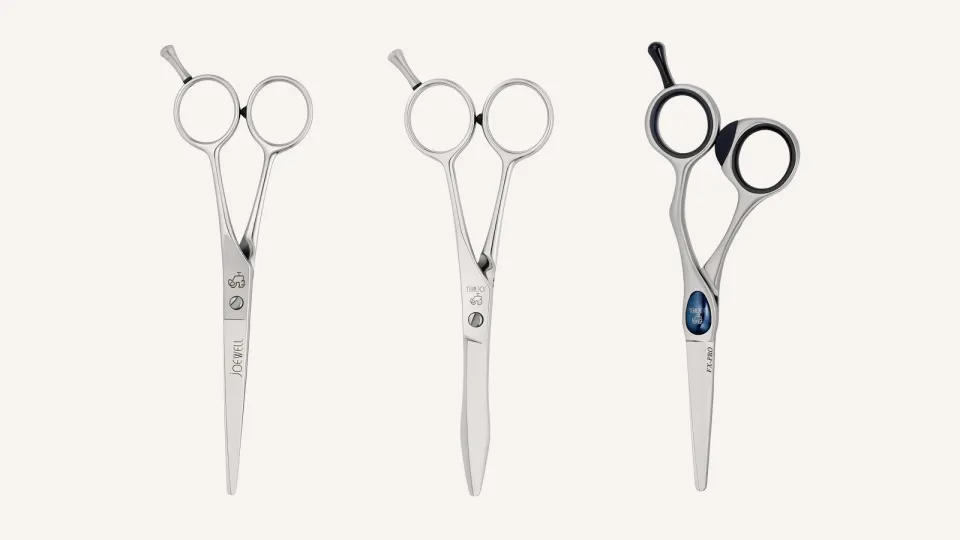
Most scissor myths are half-true: a spec that means something gets stretched into a promise. Here are ten that come up on listings, in course rooms and at the next station, each with what’s actually true.
How we chose: Ten myths picked from questions we see on listings and kit lists, checked against maker pages and our own guides. We haven’t run cutting tests. Reviewed 4 November 2026.
Why do scissor myths spread?
Listings squeeze a lot into a few words: a size, a steel name, a tooth count, a colour. Each one is true about something, and then it gets read as a promise about everything. Passing advice at the station does the rest, because “my last pair did that” travels faster than a spec sheet.
The fix is the same each time: ask what the number or the word actually describes, then check what the maker says about your exact model.
Myth 1: “A 6.0” scissor has a 6.0” blade”
What’s true: the inch size measures the whole scissor, and the blade is only part of it. Yasaka’s SA-5.5 page lists a 60 mm blade for its 5.5” pair, for example. Compare blade lengths when reach matters, and our size guide shows how.
What to do: if a maker gives a blade length, use it. If it doesn’t, ask us before you rely on the size.
Myth 2: “Tooth count tells you how much a thinner removes”
What’s true: it tells you how many teeth there are. Joewell’s E-40 and SNT-40 both have 40 teeth, but Joewell lists them at a 35% and an “about 5% or less” cut ratio. Tooth shape and spacing matter too. Use the maker’s cut ratio where there is one, as explained in our cut ratio guide.
What to do: start with a lighter ratio than you think you need. A second pass is easy to add.
Myth 3: “Japanese steel means made in Japan”
What’s true: a steel grade, a brand’s home country and a model’s factory are three separate facts. Kamisori, for instance, is a Canadian brand with Japanese-inspired designs, and some models are made in Japan. Check the product page for each fact and don’t assume one from the others.
What to do: read the origin and the steel on the product page, and ask if either is missing.
Myth 4: “Higher hardness means better scissors”
What’s true: hardness is one property, and it isn’t a score. Our 440C guide notes that 440C hardens to about 60 HRC, close to VG-10, and that the maker’s heat treatment and grind matter more than the grade name. Fit, edge, handle and care shape the daily result.
What to do: choose on how the pair fits and what you cut, then compare steel.
Myth 5: “A convex edge means it slide cuts”
What’s true: a convex edge describes how the blade is ground. It doesn’t promise sliding on every texture. Go by the use the maker describes for the model, and avoid micro-serrated edges if you want a slide, because they grip hair. The blades guide separates grind, finish and shape.
What to do: match the pair to the move before you buy. Our cutting technique guide lists what each move needs.
Shape: a sword ridge
A raised ridge along the blade makes it a sword profile. It tells you nothing about the edge.
Grind: flat to the edge
This blade, cut across, is bevelled: its outer face is ground flat down to the edge.
Grade: the steel’s name
A grade such as VG10 names one steel recipe from one steel maker.
Process: how it’s made
Powder metallurgy is a way of making steel from powder. It still has a grade, such as SG2.
Myth 6: “A right-handed pair turned over is left-handed”
What’s true: a true left-handed pair has its blades reversed, not only its handle. A right-handed pair held in the left hand stays right-handed, even if its rings look symmetrical. If you cut left-handed, choose a true left-handed pair, and see our left-handed guide for why.
What to do: pick Left in the selector, and tell your educator what you’re switching to.
Myth 7: “The right handle prevents injury”
What’s true: a handle changes how the pair sits in your hand. Straight, offset, crane and swivel layouts each put your thumb in a different place, and one may feel better to you. None of them is a treatment, and a persistent ache is a question for a health professional, not a product page. Our handle guide draws the layouts.
What to do: compare layouts by where your thumb sits, and give a new one time before you judge it.
Myth 8: “Oil disinfects your scissors”
What’s true: oil lubricates the pivot, and disinfecting is a different job. Clean and dry the pair, use a product your salon has approved if your maker allows it, and follow its label. NSW Health sets out hairdressing hygiene for NSW, and other states have their own rules. Our cleaning guide has the routine.
What to do: keep the cleaning and the oiling as two separate steps, in that order.
Myth 9: “If hair folds, the scissors need sharpening”
What’s true: folding is a symptom with several causes. Build-up in the pivot, tension that’s too loose, a section that’s too thick or a worn edge can all do it. Clean first, check the tension, then look at the edge, as our dragging scissors guide sets out. Book a service if it still folds after those steps.
What to do: write down what you tried, so a technician can see what’s already been ruled out.
Myth 10: “A black or rose-gold finish means better steel”
What’s true: a coloured finish is a thin coating on top of the scissor, and the steel and the edge underneath do the cutting. Our finishes guide explains DLC, titanium and rainbow coatings. A good coloured pair is a good pair because of its blade and fit, not its colour.
What to do: compare the steel, the edge and the fit first, then pick the finish you like.
| Myth | The fact to hold on to |
|---|---|
| Size equals blade length | Size is the whole scissor |
| Teeth tell you removal | The cut ratio does, where listed |
| Japanese steel is made in Japan | Steel, brand and factory are separate |
| Higher hardness is better | Hardness is one property |
| Convex means slide | Grind isn’t a use |
| Flipped means left-handed | Left-handed means reversed blades |
| Handles prevent injury | A handle isn’t a treatment |
| Oil disinfects | Oil lubricates |
| Folding means sharpen | Folding has several causes |
| Black means better steel | Colour is a coating |
Further reading
For definitions of each term, see our scissor glossary and the ten terms people mix up. Scissorpedia is a reference website on scissors, and Scissorpedia and SalonScissors are fellow members of the ShearAlliance. More guides are in our knowledge base.
Comparing scissors for your kit?
Tell us what you cut and which scissors you are comparing.
Useful next reading
Read all blog posts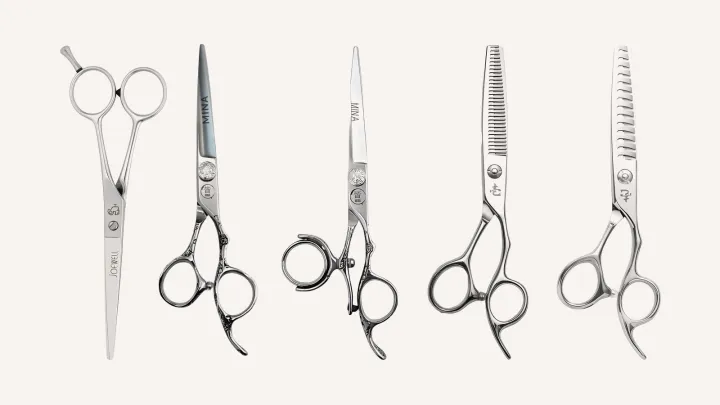
Top 10 Hair Scissor Terms That Are Easy to Mix Up
Ten pairs of hair scissor terms people confuse: size and blade length, convex and bevel, offset and crane, tooth count and cut ratio, and more.
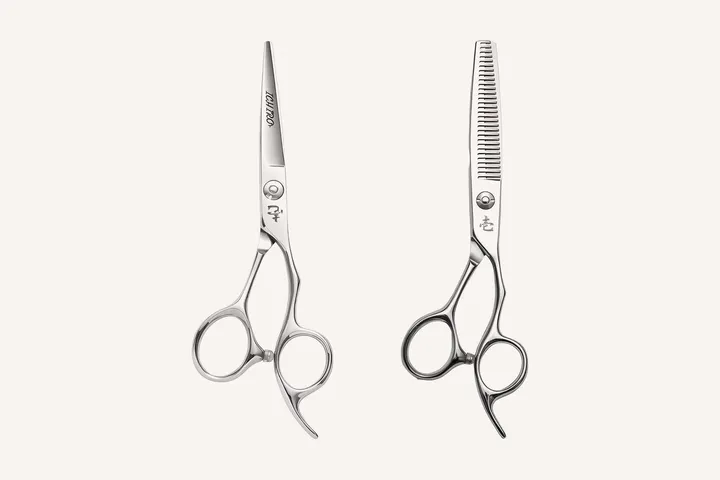
Top 10 Questions Apprentices Ask About Their Scissors
Ten questions apprentices ask once the scissors are in hand: tension, oil, tired hands, left-handed use, folding hair, sharpening, borrowing and drops.