Left-Handed Cutting Problems in the Salon: Fixes
By SalonScissors editorial team Updated
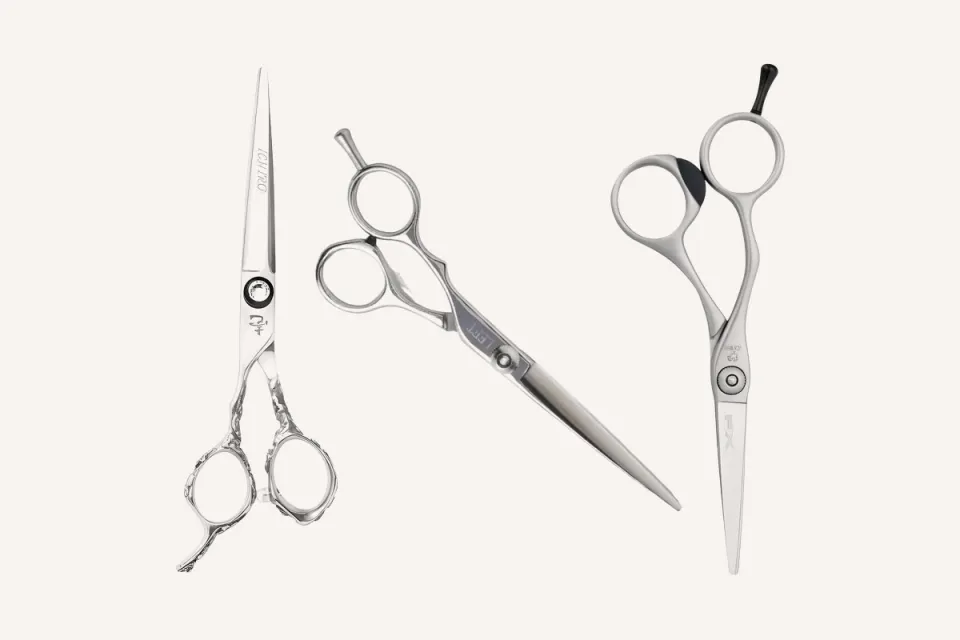
When a left-handed stylist’s cut goes wrong, check the tool before the technique. Hair pushing out, a line you can’t see or a thinner that tugs often traces back to a pair built for the other hand, so confirm that first and work through the causes in order.
How we chose: Symptoms and causes follow maker descriptions of true left-handed construction and general trade practice. Reviewed 4 November 2026. We sell left-handed pairs and haven’t run cutting tests.
Who it’s for
- Salon
- Apprentice
- Left-handed
This page is for when something already feels wrong. If you’re still setting up, our left-handed stylist guide covers the scissor, the station and learning from right-handed demonstrations.
Why do some problems only show up for left-handed stylists?
Two reasons. First, the blade arrangement matters. A true left-handed pair reverses the blades, and the crossing direction affects how well you can see the line and how the blades press together in the hand. A right-handed pair held in the left hand is still mechanically right-handed.
Second, the trade assumes a right hand. Demonstrations, shared trolleys and holsters are usually set up for it, so a left-handed stylist is often translating as well as cutting.
Which symptom points to which cause?
Several causes look alike, so don’t stop at the first one. Use the middle column as a list of things to rule out.
| What you see | Common cause | What to check |
|---|---|---|
| Hair pushes out toward the tips or folds | A right-handed pair in your hand, or tension, residue, a worn edge or alignment | Check the hand in the model name and product record. Then clean, dry and run the maker’s tension check |
| You can’t see the line you’re cutting | Blade orientation, or your hand and position hiding the line | Confirm the pair is true left-handed. Move your feet and try the other starting side |
| One side keeps finishing differently from the other | Sectioning or travel direction copied from a right-handed demonstration, or an angle that drifts when mirrored | Re-part across the cut and compare. Keep elevation steady. Practise the mirrored move on a mannequin |
| A thinner tugs or leaves lines in your hand only | A thinner built for the other hand, or product packed between the teeth | Check the thinner’s hand, then clean between the teeth. See our left-handed thinning guide |
| Fine on a mannequin, awkward on clients | Chair height, head angle or tools on the wrong side | Put tools on your cutting-hand side and set the chair so your elbow stays steady |
| A catch at one spot | A nick, chip or changed alignment | Stop and don’t cycle the blades. See our dropped scissors plan |
How do you work out whether it’s the tool or the technique?
Work through these in order and change only one thing at a time.
-
Confirm the hand
Check every cutting tool in your kit: cutter, thinner, spare and anything borrowed. A reversible finger rest doesn’t make a pair left-handed.
-
Rule out care
Brush off the hair, clean and dry the pair, and run your maker’s tension check. Don’t tighten the screw to chase a symptom.
-
Test on a practice head
Repeat the move on a mannequin. If the problem follows the pair, it’s the tool. If it follows the move, it’s technique or set-up.
-
Change one thing
Try one change: the starting side, your standing position, the sectioning direction. Then look again from the client’s side.
-
Hand it on
A catch or a feel that doesn’t recover goes to a qualified sharpener. A technique question goes to your teacher or a senior stylist.
Our sectioning and tension guide covers the two habits behind most clean cuts, and plan the cut, then check it shows how to review a result.
What if your new left-handed pair still pushes hair?
New doesn’t mean ready. Run through the same list: the hand, the care and the tension. Then use our first-use fit check, which looks at how the pair feels in your hand. If hair still pushes or folds after a clean pair is checked to the maker’s method, the edge or alignment may be at fault, and that’s a service question.
What if you teach or manage a left-handed stylist?
Show a move from their side, or ask them to mirror it and describe what they see. Keep a left-handed spare in the salon kit, and tell your sharpener which pairs are left-handed. Our salon team buying guide covers sharing and spares.
What mistakes make it worse?
- Tightening the screw to chase a push or fold. It can add wear and hide the real cause.
- Changing several things at once. You won’t know which one helped.
- Judging a pair after one client. Give a pair a fair run on a practice head first.
- Copying a demonstration’s direction without checking the angle. Mirroring a move can shift the elevation.
- Cutting on after a catch. Stop and assess the pair.
Common questions
Why does my left-handed pair push hair?
Several causes look alike: a pair built for the other hand, tension, residue, a worn edge or alignment. Check the hand first, then clean, dry and run the maker’s tension check. If it persists, ask a sharpener.
Does a reversible finger rest make scissors left-handed?
No. It changes the fit of the rest, not the blade orientation.
Should I switch to cutting right-handed?
Not as a rule. A mirrored technique is still a technique. Fix the tool and the set-up first, and judge the result.
Who should I tell if my pair needs service?
Tell the sharpener the pair is left-handed and describe the symptom. Our guide to what to ask a sharpener lists good questions.
Next step
Need a left-handed cutter or thinner? Browse the left-handed collection, or plan the whole kit with our left-handed kit plan.
Further reading
For a reference on left-handed scissor terms, Scissorpedia is an information site about hair scissors. SalonScissors is part of the ShearAlliance, working with other trusted scissor websites. More topics are in the knowledge base.